




What's Happening?
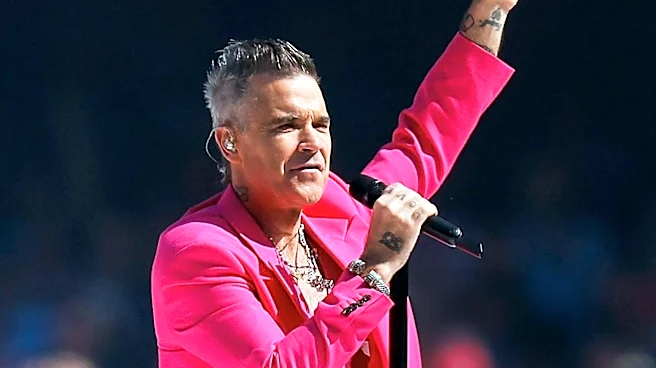
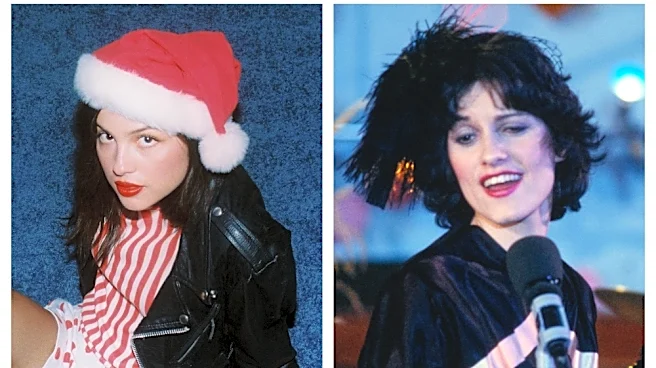
Robbie Williams has publicly defended Olivia Rodrigo following speculation that her new Christmas song, 'Take Me Home (4 Christmas),' bears a similarity to his 2012 single 'Candy.' Rodrigo's song, released on November 5th, was inspired by The Waitresses’
1981 song 'Christmas Wrapping.' Williams stated on Instagram that while some plagiarism accusations are justified, many are 'complete bollocks' and that artists inevitably produce music with similar sounds or melodies. He emphasized that he is not pursuing any action against Rodrigo, believing that excessive punishment for accidental similarities stifles creativity. The Waitresses musician Christopher Butler confirmed that Rodrigo had contacted him, acknowledging inspiration from his song.
Why It's Important?
This incident highlights a recurring issue within the U.S. music industry concerning intellectual property and creative originality. Williams's defense of Rodrigo, particularly his strong stance against 'ambulance chasing' in copyright claims, could influence how future similarity disputes are perceived and handled. His comments underscore the tension between protecting artists' work and fostering an environment where creativity is not stifled by fear of litigation. For emerging artists like Rodrigo, such accusations, even if unfounded, can be a significant distraction and potentially costly. Williams's intervention, coming from an established artist, provides a notable voice in favor of artistic freedom and against what he perceives as overzealous copyright enforcement, potentially setting a precedent for how the industry approaches these delicate matters.
What's Next?
While Robbie Williams has publicly stated he will not pursue action, the broader discussion around musical similarities and copyright remains ongoing in the industry. This event may encourage more open dialogue among artists and legal professionals about the fine line between inspiration and infringement. It could also lead to increased scrutiny of new music releases for potential similarities, though Williams's comments might temper some of the more aggressive 'ambulance chasing' tendencies he criticized. For Olivia Rodrigo, the immediate impact is likely minimal given Williams's supportive stance, allowing her to continue promoting her new holiday single and her successful third studio album without the burden of a high-profile legal dispute.
Beyond the Headlines
The debate sparked by Williams's comments delves into the philosophical underpinnings of artistic creation. His assertion that 'we all stand on the shoulders of people who came before us' speaks to the evolutionary nature of music, where influences are often subconscious or deeply embedded in cultural memory. This perspective challenges the notion of absolute originality in every musical phrase, suggesting that an overly litigious environment could lead to a chilling effect on innovation. The incident also touches on the power dynamics within the music industry, where established artists like Williams can offer protection and validation to newer talents like Rodrigo, potentially mitigating the impact of speculative claims and fostering a more collaborative, less adversarial creative landscape.