





What's Happening?
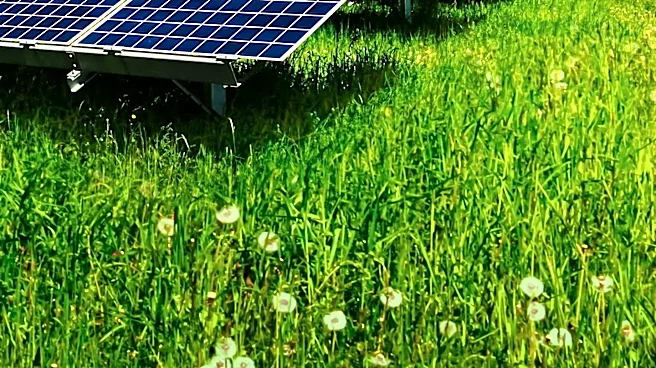
Hoosier Solar has filed a lawsuit against the LaPorte County Board of Zoning Appeals (BZA) after its plans for a solar farm were denied. The company asserts that its proposals met all necessary requirements, yet the BZA failed to provide specific reasons
for its 3-2 vote against the special exception request for agricultural zoning. The lawsuit further alleges that the decision-making process was biased, citing instances where a BZA member and a county commissioner publicly expressed opposition to the plans before the vote. Specifically, BZA member Jeff Baltes is accused of funding and distributing signage against solar projects, with a sign reading 'No Industrial Solar Plants on Farmland' reportedly displayed at his home. The lawsuit also points to Commissioner Holifield's remarks, describing Hoosier Solar as 'outside carpet baggers' seeking federal tax credits, which the company deems false and disparaging, further illustrating a lack of impartiality.
Why It's Important?
This lawsuit highlights significant challenges and potential legal hurdles faced by renewable energy developers in the U.S., particularly when local zoning boards are perceived to act with bias or fail to adhere to due process. The outcome could set a precedent for how local government bodies handle large-scale renewable energy projects, influencing future investments and the pace of clean energy transition. For Hoosier Solar, a favorable ruling would allow the development of a 300-acre solar farm, contributing to renewable energy capacity and potentially creating local jobs. Conversely, if the BZA's decision is upheld, it could deter other solar developers from pursuing projects in areas with similar regulatory environments, impacting the broader goal of increasing renewable energy infrastructure. The case also underscores the tension between agricultural land preservation and renewable energy development, a common conflict in many rural U.S. communities.
What's Next?
The lawsuit, filed in La Porte Superior Court 3, seeks a court order compelling the BZA to approve Hoosier Solar's plans. The legal proceedings will likely involve a review of the BZA's decision-making process, including whether it adhered to state laws requiring neutral and unbiased fact-finding in quasi-judicial proceedings. Commissioner Steve Holifield has defended his remarks, asserting his right to freedom of speech and suggesting the Kingsbury Industrial Park as a more suitable location for the solar farm. The court's decision will determine the immediate future of Hoosier Solar's project and could influence how similar land-use disputes involving renewable energy are resolved in Indiana and potentially beyond. Stakeholders, including environmental groups, agricultural communities, and other renewable energy developers, will closely monitor the case for its implications on land use and energy policy.
Beyond the Headlines
Beyond the immediate legal battle, this case touches upon deeper issues concerning local governance, transparency, and the balance between community interests and broader energy goals. The allegations of bias and pre-judgment by BZA members raise questions about the integrity of local decision-making processes and the potential for personal opinions to override objective criteria. This situation could lead to increased scrutiny of how local zoning boards operate, potentially prompting calls for clearer guidelines or oversight to ensure fair and impartial reviews of development proposals. Furthermore, the conflict between preserving farmland and developing renewable energy infrastructure reflects a growing national debate. The outcome could influence public perception of solar projects, either reinforcing concerns about their impact on agricultural landscapes or demonstrating the importance of transparent and equitable processes for their approval.