







What's Happening?
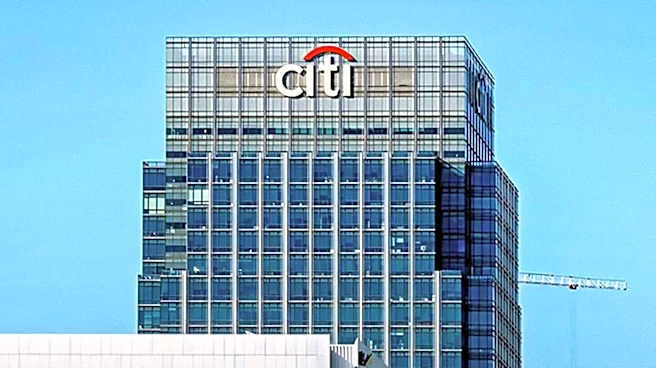
Citigroup Chief Financial Officer Gonzalo Luchetti announced that the bank expects its full-year return on tangible common equity (ROTCE) to slightly surpass the upper end of its previously stated 10% to 11% range. This optimistic outlook is driven by
sustained momentum across its markets, banking, services, and consumer businesses. Luchetti highlighted strong financing activity, particularly in capital markets for equity and debt issuance, with notable activity in technology, artificial intelligence, shipping, and energy sectors. The U.S. consumer is characterized as resilient, with approximately 6% year-over-year spending growth, excluding the American Airlines Barclays portfolio purchase. Credit trends have remained stable, with delinquencies, losses, and leading indicators declining from the previous year. Citigroup also plans to accelerate approximately $500 million of its $5 billion in incremental business investments during the remainder of the year, focusing on severance, marketing, and franchise-support initiatives, including credit-card customer acquisition and marketing for wealth and retail businesses. The company aims for an operating efficiency target slightly better than 60% for the year.
Why It's Important?
Citigroup's revised ROTCE guidance and accelerated investment plans signal a robust financial outlook for one of the largest U.S. financial institutions. This positive forecast reflects the resilience of the U.S. economy and consumer spending, which are critical indicators for broader economic health. The increased investment in areas like credit-card customer acquisition and wealth management suggests a strategic focus on expanding core revenue streams and enhancing client relationships. For investors, exceeding ROTCE targets and increasing stock buybacks, with a new $30 billion program announced, indicate a commitment to shareholder returns and confidence in future profitability. The stability in credit trends, despite ongoing economic uncertainties, underscores effective risk management within Citigroup's diverse portfolio, with over 85% of its card portfolio being prime and above. This performance can influence investor sentiment across the financial sector and potentially lead to a re-evaluation of other major banks.
What's Next?
Citigroup is scheduled to release its earnings report on October 13, 2026, where analysts anticipate earnings of $2.67 per share, marking a 19.2% year-over-year growth, and revenue of $23.74 billion, up 7.46%. The company expects to deconsolidate its Mexican business, Banamex, early next year, once its ownership falls below 50%. This deconsolidation is projected to result in a currency translation adjustment loss of approximately $9 billion, though it is not expected to affect regulatory capital or tangible common equity on a cumulative basis. An initial public offering for Banamex could follow, contingent on market conditions, timing, and valuation. Citigroup will continue to monitor geopolitical developments, AI-related disruption, inflation, interest rates, and labor-market conditions. The bank remains focused on organic growth and may pursue smaller, add-on acquisitions to expand capabilities, but not transformative transactions.
Beyond the Headlines
The acceleration of investments, particularly in severance, suggests an ongoing strategic restructuring within Citigroup to optimize its workforce and operational efficiency. This could lead to a leaner, more agile organization better positioned to adapt to evolving market demands and technological advancements, such as AI. The focus on client-driven volume growth and pricing discipline in net interest income highlights a shift towards sustainable revenue generation rather than relying solely on market fluctuations. The planned deconsolidation of Banamex, while incurring a significant accounting loss, represents a strategic move to streamline Citigroup's global operations and focus on its core U.S. and international businesses. This could free up capital and management resources, allowing for greater concentration on high-growth areas like wealth management and digital offerings, ultimately reshaping Citigroup's global footprint and competitive strategy in the long term.