




What's Happening?
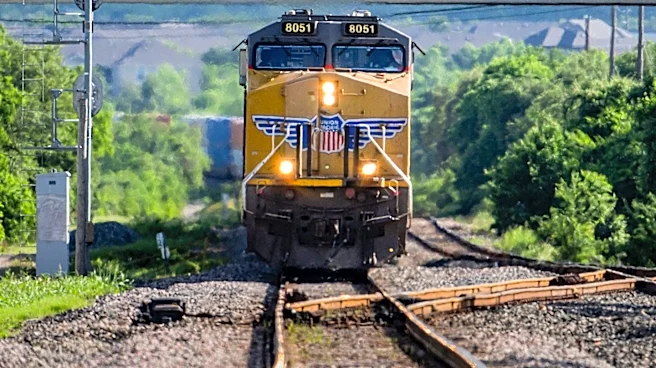
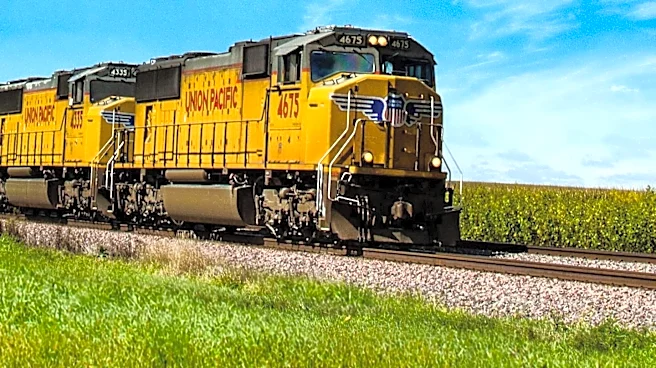
The City of Chicago has filed a 64-page comment with the Surface Transportation Board, requesting 13 conditions be imposed on any approval of the proposed merger between Union Pacific and Norfolk Southern. Chicago argues that the merger application lacks
sufficient detail and is asking for supplemental information in 11 areas. Key demands include good-faith negotiations for the sale of three properties to the city: the Weber Spur, the Low Line track near the former Blommer Chocolate Factory, and the Global 1 yard site. The city intends to convert the Weber Spur into a multi-use trail. Additionally, Chicago is seeking financial contributions for CREATE infrastructure projects, a program to replace aging railroad-owned viaducts, and immediate improvements to the Chicago-Elkhart, Indiana, route to protect Amtrak's on-time performance. This proposed merger would create the largest American railroad, combining a western and eastern carrier.
Why It's Important?
This development is significant for U.S. infrastructure, urban planning, and the freight and passenger rail industries. Chicago's demands highlight the substantial impact such a large-scale merger could have on major urban centers, particularly concerning land use, infrastructure maintenance, and public services. If approved, these conditions could set a precedent for how future large-scale infrastructure mergers are negotiated with local governments, potentially empowering cities to secure community benefits and mitigate negative impacts. The outcome will affect freight efficiency, passenger rail reliability, and the financial obligations of the merging railroads. Metra and other commuter agencies have also expressed concerns, arguing the merger could harm passenger service, indicating a broader tension between freight expansion and public transit needs. The resolution of these conditions will determine how railroad land and terminals are utilized in Chicago for years to come.
What's Next?
The regulatory timeline for the merger review is active. The deadline for comments on the completeness of competing railroads' applications is November 27, with replies due by December 1. The Department of Justice and the U.S. Department of Transportation are expected to submit preliminary comments by December 3. Union Pacific must respond to questions regarding alleged retaliation against merger opponents by December 4. Union Pacific and Norfolk Southern are scheduled to respond to all comments and requests for conditions by February 16, 2027. A public hearing by the Surface Transportation Board is planned for spring 2027. The board's final decision, and whether Chicago's conditions are incorporated, will determine the future landscape of rail operations in the region and potentially across the nation.
Beyond the Headlines
The Chicago demands underscore a growing trend of local governments asserting their interests in large-scale corporate mergers that have significant local impacts. Beyond the immediate financial and operational aspects, this case touches upon urban development, environmental initiatives (like the proposed multi-use trail), and the balance between private corporate expansion and public welfare. The city's push for land sales and infrastructure investments reflects a broader desire to reclaim and repurpose industrial land for community benefit, addressing historical urban planning challenges. The outcome could influence how future infrastructure projects are negotiated, potentially leading to more integrated planning between private corporations and public entities, and emphasizing community benefits as a condition for regulatory approval.