


What's Happening?
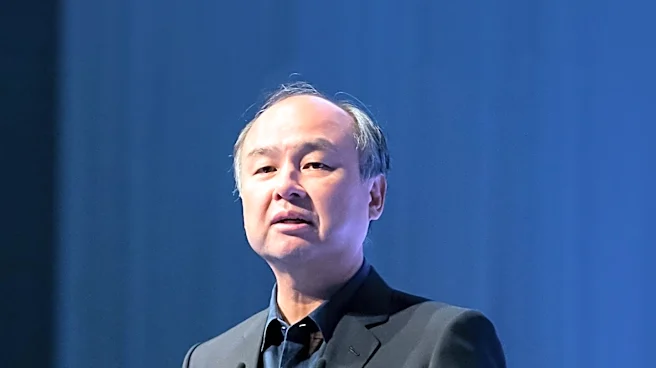
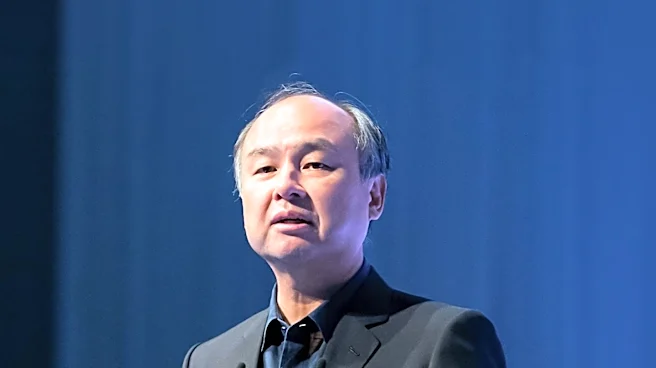
SoftBank Group CEO Masayoshi Son reportedly explored a potential acquisition of South Korean memory chip giant SK Hynix, a deal estimated to be worth over $1 trillion. According to The Information, Son approached several Wall Street financial institutions
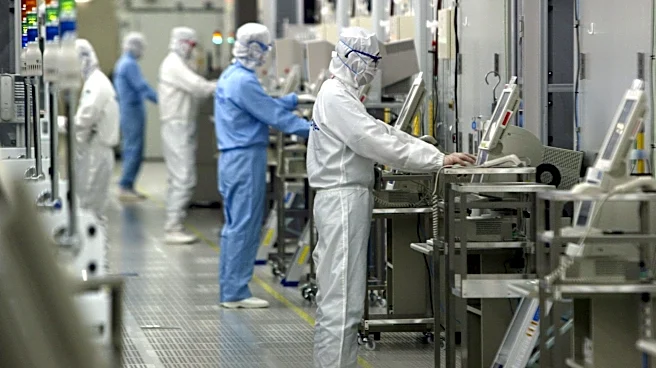
to discuss financing for this massive transaction. However, a SoftBank spokesperson has since confirmed that the plan is no longer under active consideration. SK Hynix, in response to the reports, stated it had no knowledge of the matters described by The Information. The company also emphasized that any foreign acquisition of SK Hynix would necessitate prior approval from the South Korean government, as mandated by South Korean law. This exploration highlights the strategic importance placed on high-bandwidth memory (HBM) chips, which are crucial for powering artificial intelligence accelerators.
Why It's Important?
This reported exploration, despite being abandoned, underscores the intense global competition for control over critical components in the artificial intelligence (AI) supply chain. SK Hynix is a leading producer of HBM chips, which are essential for AI processors. Gaining control over such a dominant supplier would provide significant leverage in the rapidly expanding AI hardware production market. The sheer scale of the contemplated $1 trillion deal, which would have been one of the largest corporate acquisitions ever, reflects the perceived strategic value of HBM technology. For U.S. industries and technology companies heavily invested in AI development, the control and availability of these advanced memory chips are paramount. Any consolidation or shift in ownership of key suppliers like SK Hynix could impact pricing, supply stability, and competitive dynamics within the AI sector, affecting both innovators and consumers.
What's Next?
While SoftBank has confirmed that the acquisition plan is no longer under active consideration, the episode signals a broader trend of major players seeking to secure critical AI infrastructure. The strategic importance of HBM chips will likely continue to drive interest in memory chip manufacturers. Future developments could include other companies exploring similar acquisitions or strategic partnerships to gain control over AI-enabling technologies. The South Korean government's stance on foreign acquisitions of key technology companies like SK Hynix will remain a crucial factor in any potential future deals. Investors and industry observers will continue to monitor the AI supply chain for further consolidation attempts or significant investments aimed at securing essential components for AI hardware.
Beyond the Headlines
The exploration of such a colossal acquisition, even if ultimately shelved, reveals the escalating stakes in the race for AI dominance. It highlights a shift in how companies are valuing and pursuing control over foundational technologies, moving beyond traditional market valuations to strategic imperatives driven by the AI revolution. The potential for a single entity to control a significant portion of HBM chip supply raises questions about market concentration, fair competition, and national security implications, particularly for countries reliant on these technologies. This event could also prompt governments to re-evaluate their policies regarding foreign ownership of critical technology infrastructure, potentially leading to stricter regulations or increased scrutiny of cross-border mergers and acquisitions in the tech sector.