





What's Happening?
The U.S. Commerce Department and the U.S. International Trade Commission are investigating whether to impose antidumping and countervailing duties on certain fatty acids, specifically C16 fatty acids (palmitic acid or palm fats), imported from Indonesia
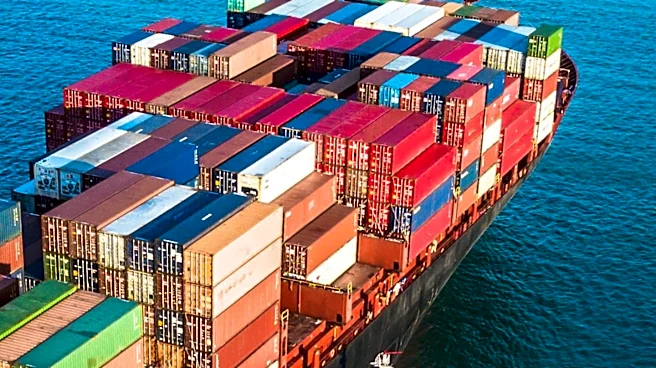
and Malaysia. These fatty acids are a crucial component in dairy cattle feed, known for improving milk fat yield. Preliminary determinations by the International Trade Administration in July set countervailing duties on Indonesian companies at 16% and antidumping rates at approximately 23%. Malaysian companies face lower rates, around 4% for CVD and 4-7% for AD. The Commerce Department is currently evaluating whether to exempt certain palm fats, including C16, from these duties, citing the lack of a nutritionally equivalent domestic substitute. A final determination is expected around February 5, 2027. These potential duties would be in addition to existing 10% tariffs under Section 301 on products from Indonesia and Malaysia, which were imposed for alleged failures to enforce prohibitions on goods made with forced labor.
Why It's Important?
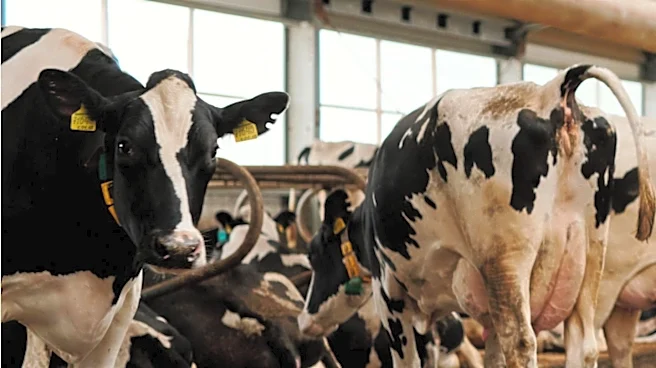
The imposition of duties on C16 fatty acids could significantly impact American dairy farmers. National Milk Producers Federation President and CEO Gregg Doud has warned that such duties would increase feed costs, which already constitute over 40% of total dairy farming expenses. Dairy farmers rely on these palm fats to enhance butterfat content without reducing milk volume, directly affecting their compensation. Unlike many other businesses, dairy farmers often cannot pass increased costs on to consumers, meaning higher input costs directly reduce their already narrow profit margins. The U.S. does not produce these specific palm fats domestically due to climatic conditions, making imports essential. The potential duties could lead to higher operational costs for dairy farms, potentially affecting milk prices and the economic stability of the U.S. dairy industry.
What's Next?
The Commerce Department is expected to issue a determination regarding the exemption of certain fatty acids, including C16, from the scope of the duties. A scope hearing was held on October 2 to gather evidence on this matter. The final determination on the antidumping and countervailing duties is scheduled for around February 5, 2027. Stakeholders, including the National Milk Producers Federation, the Coalition for Affordable Ingredients, the Orthodox Union, and the Household and Commercial Products Association, are actively lobbying the Commerce Department for exemptions, emphasizing the lack of domestic alternatives and the potential negative impact on U.S. industries. The outcome of this investigation will determine the future cost structure for dairy farmers and potentially influence trade relations with Indonesia and Malaysia regarding these agricultural inputs.
Beyond the Headlines
This situation highlights the complex interplay between international trade policies, domestic agricultural economics, and global supply chains. The case underscores how trade remedy laws, intended to protect domestic industries from unfair competition, can inadvertently affect other sectors that rely on imported inputs not produced domestically. The debate over exemptions for C16 fatty acids reveals a tension between protecting U.S. manufacturers (like the petitioner, Vantage Specialty Chemicals Inc.) and ensuring the affordability and availability of critical inputs for other U.S. industries, such as dairy farming. The existing Section 301 tariffs further complicate the trade landscape, demonstrating how multiple layers of trade restrictions can accumulate and create significant financial burdens for importers and end-users, potentially leading to higher consumer prices or reduced competitiveness for U.S. agricultural products.