





What's Happening?
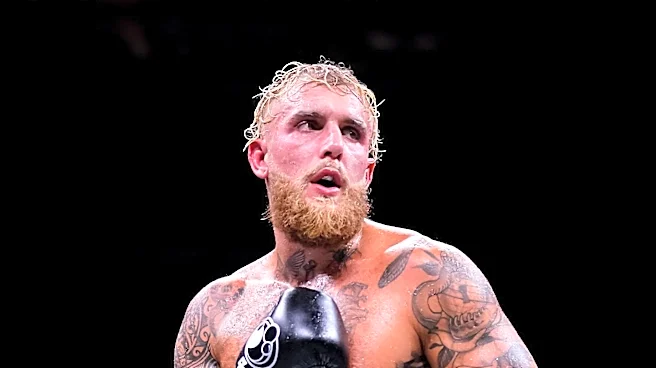
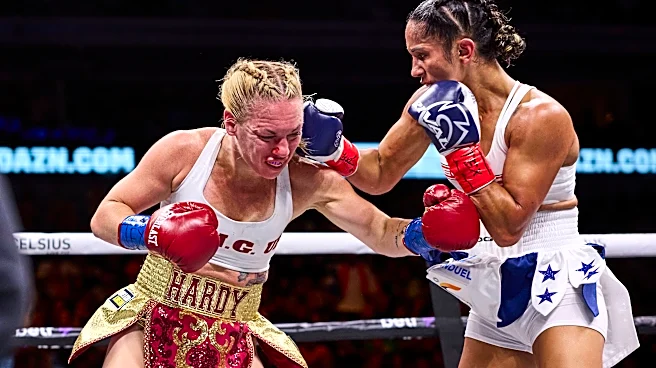
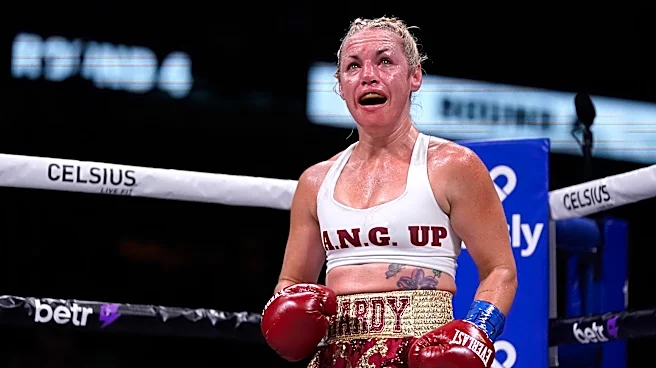
Former women's WBO featherweight champion Heather Hardy is suing Jake Paul and Most Valuable Promotions (MVP) for $10 million, alleging that a fight arranged by Paul's promotion company led to her suffering lasting neurological damage. Hardy claims the rematch
against Amanda Serrano, which she took while in financial distress, resulted in symptoms similar to Chronic Traumatic Encephalopathy (CTE). She asserts that Paul and MVP exploited her despite being aware of the severe risks of neurological harm. Hardy, who retired with a 24-3 record, states that the fight ended her career and has made it impossible for her to maintain regular employment. She has assembled a team of five lawyers to pursue the case, indicating that there are unreleased details she is legally unable to disclose at this time. The lawsuit has generated divided opinions among fans, with some supporting Hardy's claims and others accusing her of attempting to extort Paul.
Why It's Important?
This lawsuit highlights significant concerns within the combat sports industry regarding fighter safety, particularly the long-term neurological health of athletes. A $10 million claim for CTE-like symptoms against a prominent figure like Jake Paul could set a precedent for how promoters are held accountable for the well-being of fighters, especially those who may be vulnerable due to financial circumstances or age. The case could influence future contractual agreements, medical protocols, and risk assessments in boxing and other combat sports. If successful, it might lead to increased scrutiny of promotional practices and a greater emphasis on protecting fighters from potential brain injuries. This could also impact the careers of influencer-turned-boxers and their associated promotional companies, potentially leading to more stringent regulations or higher insurance costs within the sport.
What's Next?
The lawsuit will proceed through the legal system, with Hardy's legal team working to present their case and Paul's defense preparing its response. The outcome could involve a lengthy court battle or a potential settlement. Depending on the evidence presented and the court's findings, this case could lead to broader discussions about fighter welfare and the responsibilities of promoters in combat sports. It may also prompt regulatory bodies to review existing guidelines for fighter health and safety, particularly concerning rematches and the participation of older athletes. The public and media will likely continue to follow the developments closely, given Jake Paul's high profile and the serious nature of the allegations.
Beyond the Headlines
Beyond the immediate legal battle, this lawsuit touches upon the ethical considerations of promoting fights where one participant may be at a higher risk of injury. The allegation that Paul and MVP 'used' Hardy despite knowing the risks raises questions about the moral obligations of promoters to their fighters, especially when financial incentives might overshadow health concerns. This case could contribute to a larger societal conversation about the inherent dangers of combat sports and the need for robust protections for athletes. It might also influence public perception of celebrity involvement in professional sports, particularly when business ventures intersect with athlete safety. The long-term implications could include a re-evaluation of how neurological health is monitored and managed throughout a fighter's career, potentially leading to industry-wide changes in medical screening and post-career support.