




What's Happening?
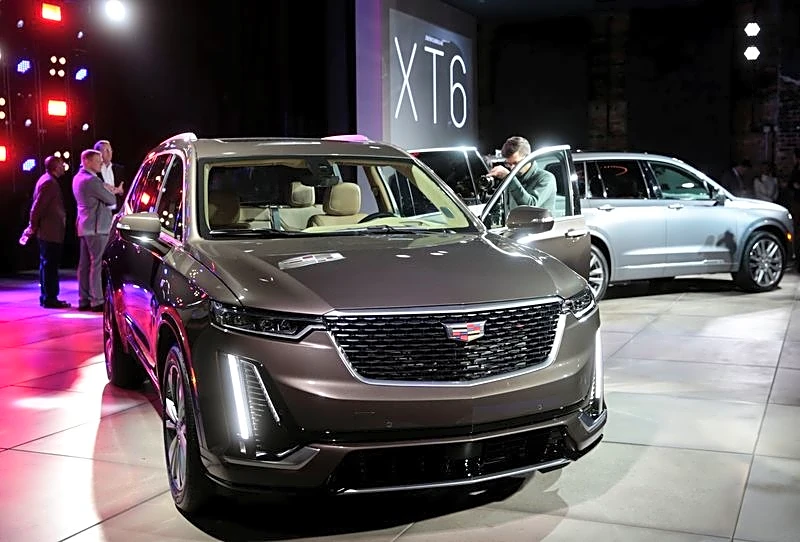
General Motors (GM) has outlined its comprehensive strategy for integrating advanced technology into its future vehicles and operational processes. The company plans to introduce enhanced OnStar capabilities starting in 2027 with the Cadillac Lyriq, which
will then roll out to other models and can be retrofitted to some existing GM cars. This enhanced OnStar will feature an AI assistant designed to transform the car into an intelligent partner. Furthermore, GM is set to launch autonomous driving technology on the 2028 Cadillac Escalade iQ/iQL, initially for highway use with a vision for full autonomy across all roads. The company also announced that it will halve the development time for new vehicles, reducing it to two years from concept to production, by leveraging artificial intelligence and virtual modeling in its product development process.
Why It's Important?
GM's technology roadmap signifies a major push towards the future of automotive innovation, with significant implications for the U.S. auto industry and consumers. The accelerated product development cycle, enabled by AI, could allow GM to bring new models to market faster, responding more quickly to consumer demands and competitive pressures. The introduction of advanced autonomous driving features and an AI-powered OnStar system could redefine the in-car experience, offering greater convenience, safety, and connectivity. This move positions GM as a leader in the evolving automotive landscape, potentially influencing industry standards and consumer expectations for vehicle technology. The focus on electric vehicles (EVs) with the Gen 4 EV architecture, featuring lower-cost and more compact batteries, also underscores GM's commitment to the growing EV market, which is crucial for environmental sustainability and energy independence.
What's Next?
Consumers can anticipate the rollout of GM's enhanced OnStar AI assistant in the Cadillac Lyriq in 2027, followed by its expansion to other models. The 2028 Cadillac Escalade iQ/iQL will be the first to feature GM's autonomous driving technology, initially on highways, with plans for broader application. The accelerated product development process means that new GM vehicles could arrive on the market more frequently, showcasing the latest technological advancements. This rapid innovation cycle will likely intensify competition within the automotive sector, pushing other manufacturers to accelerate their own technology integration efforts. The success of these initiatives will depend on consumer adoption, regulatory frameworks for autonomous vehicles, and the continued advancement of AI and battery technologies.
Beyond the Headlines
GM's ambitious technological advancements hint at a profound transformation of personal mobility and the automotive industry's role in daily life. The vision of vehicles as 'intelligent partners' and the eventual goal of full autonomy suggest a future where driving is not just a means of transport but an integrated, seamless experience. This shift raises ethical considerations regarding AI decision-making in autonomous vehicles and privacy concerns related to the extensive data collected by enhanced OnStar systems. The rapid development cycle, while beneficial for innovation, also poses challenges for quality control and ensuring the reliability of complex new technologies. Ultimately, GM's strategy reflects a broader societal move towards greater automation and connectivity, with cars becoming increasingly sophisticated extensions of our digital lives.