





What's Happening?
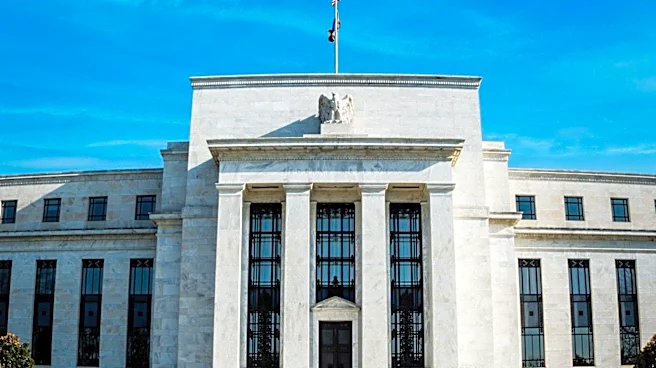
A recent study by the Federal Reserve indicates that global supply chain disruptions are increasingly influencing domestic prices, particularly producer prices, in the United States and other economies. The research highlights that when foreign suppliers
face disruptions or high demand, the cost and availability of inputs for firms become more challenging, leading to price increases or reduced output. This effect is more pronounced for producer prices, which are directly exposed to input costs, and subsequently impacts consumer prices as these costs are passed on. The study uses country-specific measures of supplier delivery times (SDT) from manufacturing Purchasing Managers' Index (PMI) surveys to assess supply chain stress. It found a stronger association between foreign supplier conditions and domestic prices since 2023 compared to the period before 2020, suggesting heightened international interdependence. For instance, a one-standard-deviation rise in foreign delivery times is associated with higher consumer and producer price inflation, with the effect being significantly larger for producer prices.
Why It's Important?
This increased interdependence in global supply chains has significant implications for the U.S. economy. It means that domestic inflation is less solely dependent on internal economic conditions and more susceptible to external shocks affecting foreign suppliers. For U.S. businesses, particularly those heavily reliant on international inputs, disruptions abroad can directly translate into higher operational costs and potentially reduced profitability. Consumers may ultimately bear these costs through higher prices for goods. The study's finding that the link between foreign supplier conditions and domestic prices has strengthened since 2023 suggests a more vulnerable U.S. economy to global supply chain volatility. This necessitates a greater focus on monitoring international economic conditions and supply chain health by policymakers and businesses to anticipate and mitigate inflationary pressures.
What's Next?
The findings suggest that U.S. policymakers and businesses will need to continue closely monitoring global supply chain health and international economic conditions. The Federal Reserve's analysis indicates that the period since 2023 shows a stronger link between foreign supply chain stress and domestic inflation, particularly for producer prices. While the study notes that the period since 2023 is relatively short, ongoing analysis will be crucial to evaluate the robustness of these trends. Businesses may explore strategies such as diversifying their sourcing geographically or increasing domestic production to reduce reliance on single points of failure in the global supply chain. Policymakers might consider measures to enhance supply chain resilience and mitigate the impact of external shocks on domestic prices.
Beyond the Headlines
The study's insights extend beyond immediate price impacts, touching upon the evolving landscape of global trade and geopolitical fragmentation. While the research does not directly measure firms' sourcing diversification, it notes that the larger coefficient since 2023 could indicate greater exposure to foreign conditions or that existing exposure matters more during times of stress. The shifting geography of international production, including changes in China's role as a supplier and the U.S.'s shift in import sources (e.g., Mexico becoming a larger source), highlights a complex and dynamic global trade environment. This suggests that the U.S. economy's vulnerability to supply chain disruptions is not static but is continually reshaped by geopolitical events and trade policies, requiring adaptive strategies from both the public and private sectors.