




What's Happening?
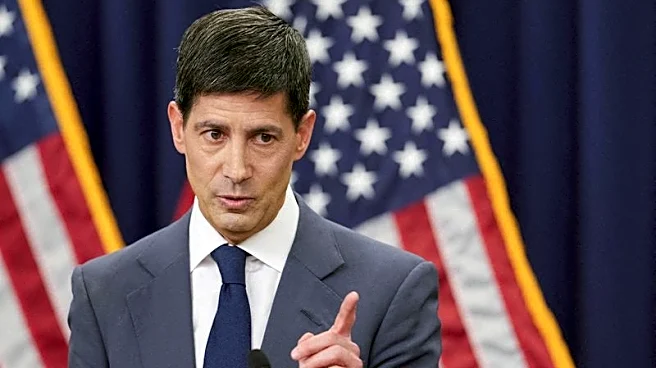
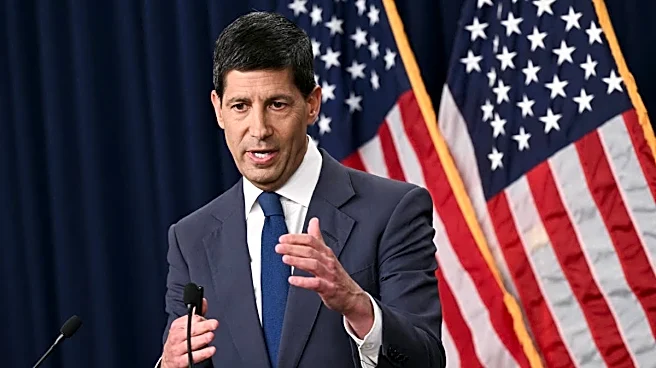
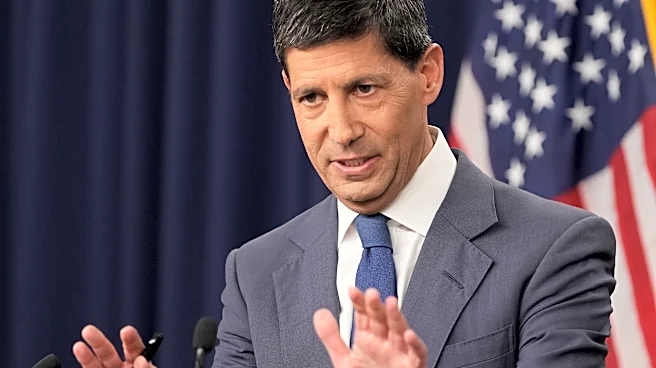
Kevin Warsh, a key figure at the Federal Reserve, has indicated that while the current inflation target remains the Personal Consumption Expenditures (PCE) inflation, there may be a shift in the measure used to assess inflation by January 2027. During
a recent press conference, Warsh emphasized the Fed's commitment to the 2% PCE inflation target, a standard since 2012. However, he hinted at the possibility of adopting a different measure in the future, suggesting that task forces might influence this change. Warsh's comments have raised concerns about the Fed's consistency and credibility, as the PCE has been the longstanding benchmark for inflation targeting. His remarks also highlighted the use of various inflation measures, such as core and trimmed mean, to understand underlying price changes in the economy.
Why It's Important?
The potential shift in the Federal Reserve's inflation measure could have significant implications for U.S. economic policy and financial markets. The PCE inflation target has been a cornerstone of the Fed's strategy, providing a consistent framework for monetary policy. A change in this measure could lead to uncertainty in financial markets, as evidenced by the immediate reaction to Warsh's comments, which saw declines in stocks, bonds, and the dollar. The 30-year Treasury yield also rose to its highest level since 2007. Such volatility underscores the importance of clear and consistent communication from the Fed. A shift in the inflation measure could affect interest rate decisions, impacting borrowing costs, investment strategies, and overall economic stability.
What's Next?
As the Federal Reserve approaches its routine January vote on the Longer-Run Goals and Strategy statement, stakeholders will closely monitor any developments regarding the potential change in the inflation measure. Financial markets, policymakers, and economists will be particularly attentive to any signals from Warsh or other Fed officials about the direction of future policy. The task forces mentioned by Warsh may play a crucial role in shaping the Fed's strategy, potentially leading to a reevaluation of the inflation target. The outcome of these deliberations could influence the Fed's approach to achieving price stability and its broader economic objectives.