






What's Happening?
Prince William has expressed his enthusiasm for the United Kingdom being awarded the hosting rights for the 2035 Women's World Cup. He described the decision as "brilliant news" for women's football and the UK, emphasizing its potential to inspire a new generation
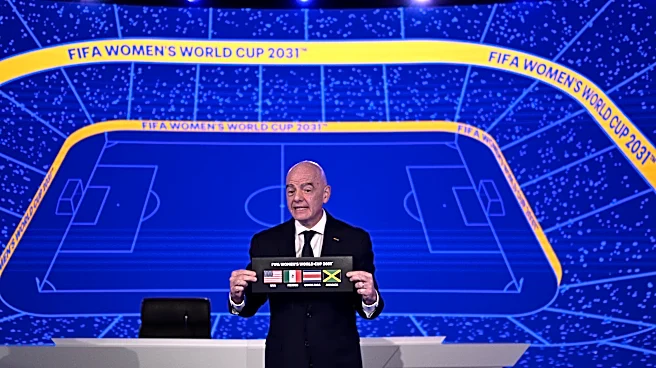
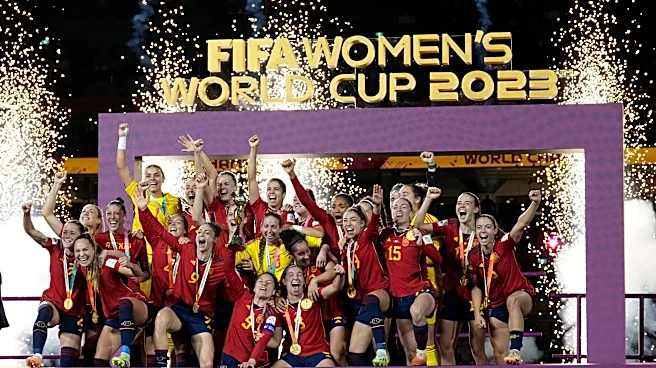
of footballers. The Prince of Wales shared his excitement after FIFA officially confirmed that England, Scotland, Wales, and Northern Ireland will jointly host the tournament. This announcement was made during a virtual Extraordinary Congress where the joint bid was approved by acclamation. The tournament is anticipated to be one of the largest sporting events ever held in the UK, featuring 48 teams, 104 matches, and spanning 39 days. The UK was the sole valid candidate for the 2035 competition, as FIFA had limited eligibility to countries within the European and African football confederations. The next Women's World Cup is scheduled for Brazil in 2027, followed by the 2031 tournament in the United States, Mexico, Costa Rica, and Jamaica.
Why It's Important?
The UK's successful bid to host the 2035 Women's World Cup carries significant implications for the sport and the nation. Prince William, a long-standing supporter of women's football and Patron of the Football Association since 2024, highlights the event's capacity to inspire future generations. Hosting such a major international tournament is expected to boost the profile of women's football across the UK, potentially increasing participation rates and fan engagement. Economically, the event is projected to attract a substantial global television audience of 3.5 billion and make 4.5 million tickets available, suggesting a considerable influx of tourism and revenue. This will be the first World Cup hosted by the UK since England's men's team won the tournament in 1966, marking a historic return of a major football World Cup to British soil and offering a significant platform for national pride and international exposure.
What's Next?
With the UK confirmed as the host for the 2035 Women's World Cup, the focus will now shift towards the extensive preparations required for such a large-scale event. The bid team has identified 22 potential stadiums across 15 host cities, including iconic venues like Wembley, Old Trafford, and Hampden Park. The next step will involve narrowing down this selection to between 14 and 16 stadiums to finalize the host venues. Planning will also commence for logistics, infrastructure, security, and promotional activities to accommodate the 48 participating teams and millions of spectators. The success of the 2027 tournament in Brazil and the 2031 tournament in the United States, Mexico, Costa Rica, and Jamaica will likely provide valuable insights and benchmarks for the UK's organizing committee as they prepare for 2035.
Beyond the Headlines
Beyond the immediate sporting and economic benefits, the 2035 Women's World Cup in the UK could have profound cultural and social impacts. Prince William's endorsement underscores the growing recognition and support for women's sports at the highest levels. Hosting the tournament could further challenge gender stereotypes in sports, promoting greater equality and visibility for female athletes. The event offers a unique opportunity to foster national unity and pride, bringing together diverse communities across England, Scotland, Wales, and Northern Ireland. Furthermore, the legacy of the tournament could extend beyond 2035, potentially leading to increased investment in grassroots women's football programs, improved facilities, and a sustained rise in female participation in sports, contributing to a healthier and more inclusive society.