







What's Happening?
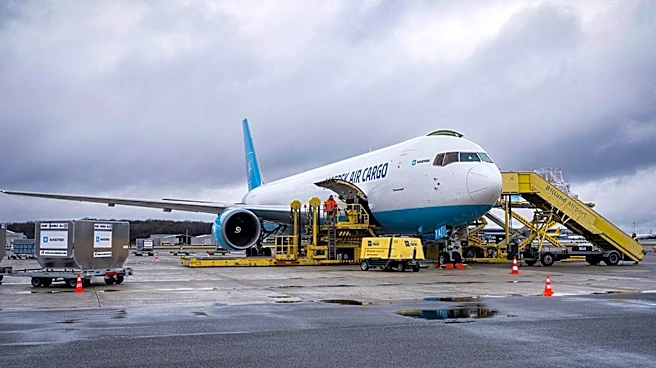
Bermuda Air, in collaboration with Embraer and Regional One, has launched commercial operations of an Embraer E190F freighter aircraft. This makes Bermuda Air the second airline globally to operate an E-Jet freighter and the first in the Americas. The
E190F is a converted passenger jet, specifically an Embraer E190, modified for cargo operations. Bermuda Air will lease one E190F from Regional One, which holds a firm order for five such aircraft and has already delivered two converted units. This introduction allows Bermuda Air to expand its aviation network by offering cargo services alongside its existing regional passenger services, which utilize Embraer E175 and E190 aircraft to 10 destinations across the Caribbean, the United States, and Canada. The E190F offers over 100 cubic meters of cargo capacity and a maximum payload of 13.5 tonnes, designed for markets requiring more capacity than turboprop cargo aircraft but not the larger narrow-body freighters.
Why It's Important?
The introduction of the Embraer E190F freighter by Bermuda Air signifies a notable shift in regional cargo transportation, particularly for smaller markets and island economies like Bermuda and other Caribbean destinations. This development addresses the increasing need for flexible aircraft solutions that can efficiently operate on shorter routes, connecting smaller communities with improved cargo links. For U.S. businesses and logistics customers, this could translate into more reliable and faster trade connections with these regions, supporting the movement of products, supplies, and time-sensitive shipments. The E190F fills a gap in the cargo market by offering a middle option between turboprop and larger narrow-body freighters, potentially lowering operating costs for airlines while maintaining competitive cargo capabilities. This model of passenger-to-freighter conversion also highlights a growing trend in the aviation industry to reuse existing passenger aircraft, creating cargo capacity more efficiently and extending the operational life of older fleets.
What's Next?
The successful operation of the E190F by Bermuda Air in the Americas could encourage wider adoption of regional freighters across other markets, particularly those with similar needs for reliable cargo connections that may not generate sufficient demand for larger aircraft. Airlines and logistics companies will likely monitor the efficiency and economic benefits demonstrated by Bermuda Air's new service. Regional One, as the lessor with additional E190F orders, is poised to expand the availability of these converted freighters, potentially leading to more airlines entering the regional cargo market. Businesses interested in regional freight options should review available routes and cargo capacity as Bermuda Air integrates this new service into its operations. The broader aviation industry may see an acceleration in passenger-to-freighter conversion programs as a cost-effective strategy to meet evolving cargo transportation demands and optimize fleet utilization.
Beyond the Headlines
The shift towards regional cargo aircraft like the Embraer E190F reflects a deeper trend in aviation where specialized market requirements are driving innovation beyond traditional large-scale operations. This approach not only enhances logistical capabilities for smaller economies but also contributes to sustainability by extending the lifespan of existing aircraft through conversion. The emphasis on regional efficiency and flexible operations could foster greater economic resilience in areas heavily reliant on air freight for supply chains, particularly island nations. Furthermore, the success of such conversions could influence aircraft manufacturers to design future passenger aircraft with easier conversion potential, integrating cargo capabilities from the outset. This evolution in aircraft utilization underscores a strategic adaptation within the industry to optimize resources and cater to diverse, often underserved, market segments, potentially leading to a more interconnected and responsive global logistics network.