


What's Happening?
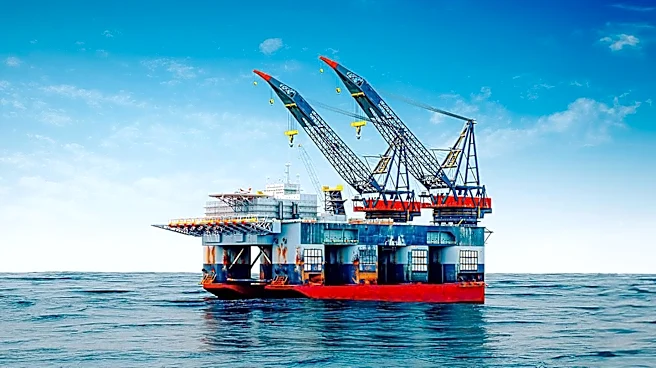
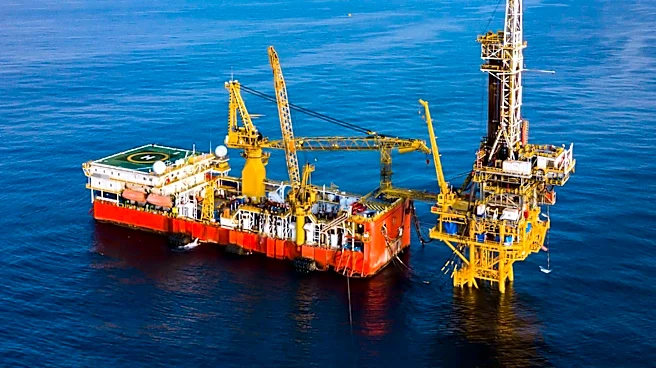
Boskalis, a maritime services company, has repurposed a former mining ship into the Windpiper, the largest subsea rock installation vessel. Originally built in 2018 as the Mac Goliath for offshore mining, the ship was left incomplete due to financial
issues faced by its original owners. Boskalis acquired the vessel in 2025, redesigning it to support offshore wind farms. The Windpiper, measuring 227 meters and nearly 69,000 dwt, features two large holds with a capacity of 45,500 tons and advanced positioning capabilities. The vessel's redesign includes a moonpool for fall pipe installation, enhancing its utility in the offshore industry.
Why It's Important?
The conversion of the Windpiper represents a significant advancement in the offshore industry, particularly for wind farm construction. By doubling Boskalis' rock installation capacity, the vessel offers logistical advantages, such as fewer round trips between loading and project sites, reducing costs and installation time. This development underscores the growing importance of renewable energy infrastructure and the innovative reuse of existing maritime assets. The Windpiper's capabilities could accelerate the deployment of offshore wind farms, contributing to global efforts to transition to sustainable energy sources.
What's Next?
The Windpiper is set to begin operations following its christening in Rotterdam. Its deployment will likely influence the offshore wind industry by setting new standards for efficiency and capacity in subsea rock installation. As the demand for renewable energy infrastructure grows, similar conversions of existing vessels may become more common, driving further innovation in the maritime sector. Industry stakeholders may respond by investing in similar projects, potentially leading to increased competition and advancements in offshore construction technologies.