







What's Happening?
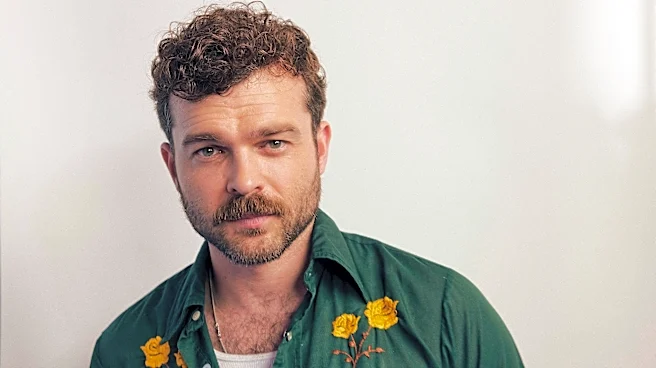
Actor Austin Butler's quote, 'Embarrassment is an under-explored emotion,' is being used to highlight the complexities of vulnerability and emotional expression in contemporary relationships. The quote is featured in an article discussing the dilemma
of whether to speak one's feelings or suppress them, drawing parallels to the themes explored in André Aciman’s novel and Luca Guadagnino’s film adaptation 'Call Me by Your Name.' The article suggests that many young adults opt to 'die' or suppress their emotions rather than speak them, often due to fear of rejection or past trauma. This avoidance leads to 'situationships' and 'talking stages' instead of meaningful romantic connections, as individuals fear the vulnerability required for deeper engagement. The piece argues that withholding emotions can be a form of 'dying' that stunts emotional availability.
Why It's Important?
This discussion is important because it sheds light on a prevalent issue in modern U.S. society: the struggle with emotional vulnerability and authentic communication in relationships. The reluctance to express feelings, as highlighted by Butler's quote, can lead to superficial connections and emotional stagnation, impacting mental well-being and the formation of lasting bonds. For individuals, this can result in unfulfilled emotional lives and a sense of isolation. For society, a widespread avoidance of vulnerability could contribute to a culture of emotional detachment, potentially affecting social cohesion and the quality of interpersonal relationships. The emphasis on 'speaking with your whole heart' challenges this trend, advocating for a more emotionally honest approach that, while risky, is presented as essential for human experience and genuine connection.
What's Next?
The ongoing conversation around emotional vulnerability, spurred by cultural references like Austin Butler's quote, is likely to continue influencing how individuals approach relationships and self-expression. As more discussions emerge, there may be a gradual shift towards greater openness, particularly among younger generations who are increasingly vocal about mental health and emotional well-being. This could manifest in evolving dating norms, with a greater emphasis on clear communication and emotional honesty. Additionally, therapists and relationship counselors may increasingly incorporate these themes into their practices, helping individuals navigate the fears associated with vulnerability. The cultural impact could also extend to media, with more narratives exploring the benefits and challenges of emotional transparency in relationships.
Beyond the Headlines
The deeper implication of this discussion lies in its challenge to societal norms that often equate emotional stoicism with strength. The article, through Butler's quote, suggests that embarrassment and other 'under-explored' emotions are not weaknesses but integral parts of the human experience that, when acknowledged, can lead to profound growth and connection. This perspective encourages a re-evaluation of what it means to be 'strong' in relationships, shifting from emotional suppression to courageous expression. Ethically, it raises questions about the responsibility individuals have to themselves and others to communicate authentically, even when it's difficult. Culturally, it reflects a growing desire for deeper, more meaningful interactions in an increasingly digital and often superficial world, hinting at a potential long-term shift towards valuing emotional depth over perceived emotional invulnerability.