
What's Happening?
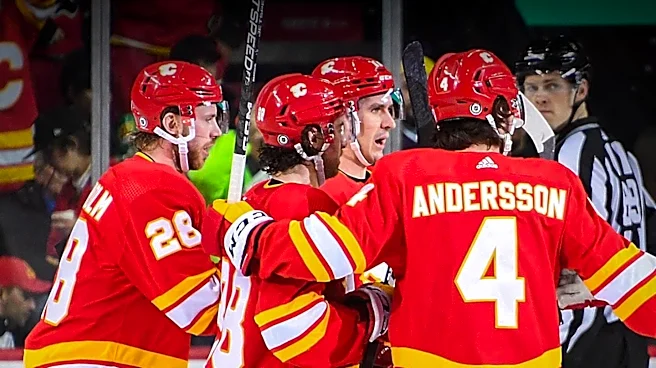
The Calgary Flames are facing significant roster decisions as key players, including Jonathan Huberdeau and Sam Honzek, are nearing their return from injuries. Their absences earlier in the season created
opportunities for several call-ups from the depth chart, who have since impressed the coaching staff. Players like Aydar Suniev, Jonathan Castagna, and Joel Hanley have stepped up to fill roles in the top nine forwards and defensive pairings. Huberdeau has been a full participant in recent practices, while Honzek has also returned to full participation before being assigned to the Wranglers. Head coach Ryan Huska has expressed optimism about the increased competition for lineup spots, noting that the players who have filled in have earned their places, which will lead to difficult choices once the injured players are fully healthy and ready to return to the active roster. The Flames are set to begin a three-game road trip against the Los Angeles Kings.
Why It's Important?
The impending return of key players like Huberdeau and Honzek, coupled with the strong performances of injury call-ups, creates a competitive internal environment for the Calgary Flames. This situation can be a double-edged sword: while increased competition can elevate overall team performance and depth, it also necessitates difficult decisions regarding who remains in the lineup and who gets sent down. For the players who stepped up, maintaining their NHL spots will be a challenge, potentially impacting their development and morale. For the team, managing these roster changes effectively is crucial for maintaining chemistry and momentum, especially as they embark on a road trip. The decisions made by the coaching staff will reflect the team's strategic priorities and could influence their performance in the competitive NHL Western Conference.
What's Next?
As Jonathan Huberdeau and Sam Honzek near their full return to the active roster, the Calgary Flames coaching staff will need to make critical decisions regarding their lineup. This will likely involve evaluating the performance of the current roster against the returning veterans. Some of the impressive call-ups may be reassigned to the AHL, while others might retain their spots, leading to shifts in line combinations. The team will need to carefully manage player morale and ensure that the competitive environment remains positive and productive. The upcoming three-game road trip, starting against the Los Angeles Kings, will be an important period for the team to solidify its lineup and build chemistry with the reintegrated players. The performance during this stretch will provide further insights into the effectiveness of the roster adjustments.
Beyond the Headlines
This situation highlights the perennial challenge faced by professional sports teams: balancing player development with immediate competitive needs. The success of injury call-ups often forces organizations to re-evaluate their depth charts and consider unexpected talent. This can lead to long-term benefits, as players who seize these opportunities often become valuable assets. However, it also creates a delicate management task, as coaches must navigate the expectations of established veterans and the aspirations of emerging players. The Flames' handling of this situation could serve as a case study in effective roster management, demonstrating how to leverage internal competition to foster a stronger, more resilient team while maintaining a positive locker room environment. It also underscores the importance of a robust minor league system in developing players ready to step into NHL roles when called upon.