



What's Happening?
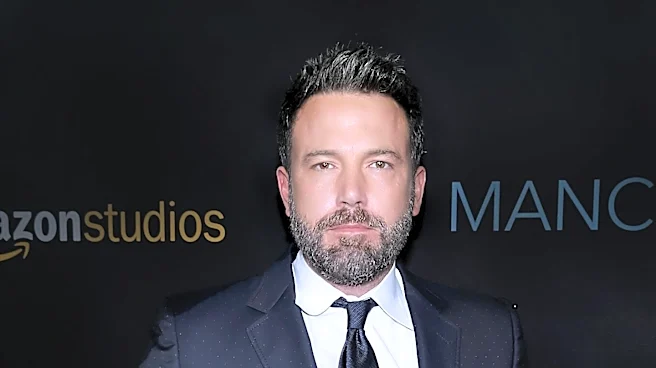
Actor and filmmaker Ben Affleck has stated he would decline significant film opportunities, even those from acclaimed directors like Martin Scorsese or Christopher Nolan, if they threatened his personal life and current lifestyle. Affleck, who has decades
of experience in the film industry, explained in a recent conversation that he has reached a point where maintaining his deliberately built life takes precedence over career ambition. He recounted a discussion where Matt Damon suggested a Christopher Nolan film might be a final chance for a project of that scale, prompting Affleck to consider his priorities. Affleck emphasized that while such films offer extraordinary creative experiences, there is a 'cost' to intense dedication that can lead to missing out on present life experiences. This philosophy extends to turning down a hypothetical project like 'The Odyssey' if it meant compromising his personal well-being.
Why It's Important?
Affleck's stance highlights a growing trend among high-profile individuals in demanding industries to prioritize work-life balance and personal well-being over relentless career advancement. This perspective from a major Hollywood figure could influence how other actors and creatives approach their careers, potentially shifting industry norms that often demand extreme dedication and long hours. For studios and directors, it may signal a need to adapt production schedules and demands to accommodate talent seeking a more balanced life, potentially impacting project timelines and creative processes. It also reflects a broader societal conversation about the sustainability of hyper-ambitious career paths and the value placed on personal fulfillment outside of professional achievements, especially in an industry known for its all-consuming nature.
Beyond the Headlines
Affleck's decision to prioritize his personal life over potentially career-defining roles from legendary directors like Scorsese and Nolan speaks to a deeper cultural shift regarding success and fulfillment. In an industry often characterized by relentless pursuit of accolades and box office success, his perspective challenges the traditional narrative that professional achievement must come at any personal cost. This could spark further discussions about mental health, burnout, and the definition of a 'successful' career in Hollywood and beyond. It also subtly critiques the industry's demanding nature, suggesting that even at the pinnacle of success, the personal toll can be too high. This shift might encourage a re-evaluation of industry practices that often push individuals to their limits, fostering a more sustainable and human-centric approach to creative work.