







What's Happening?
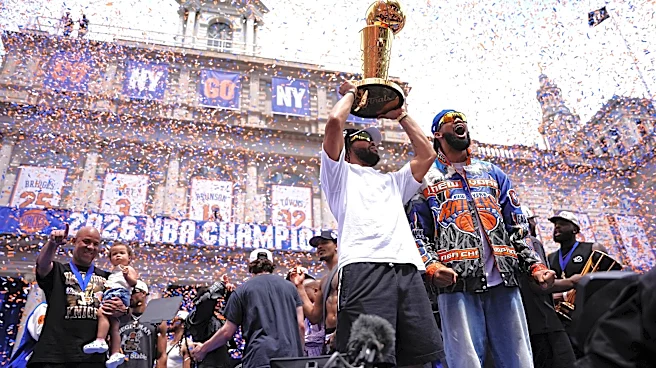
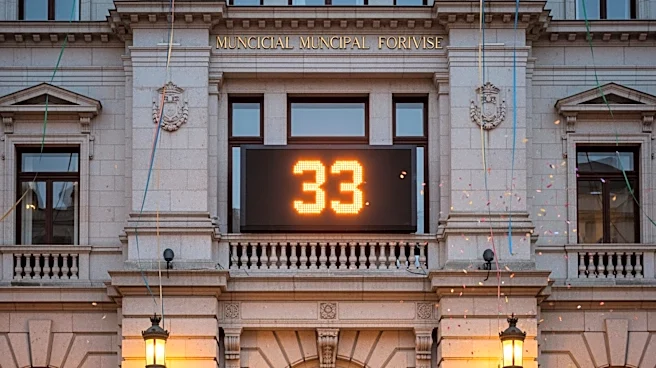
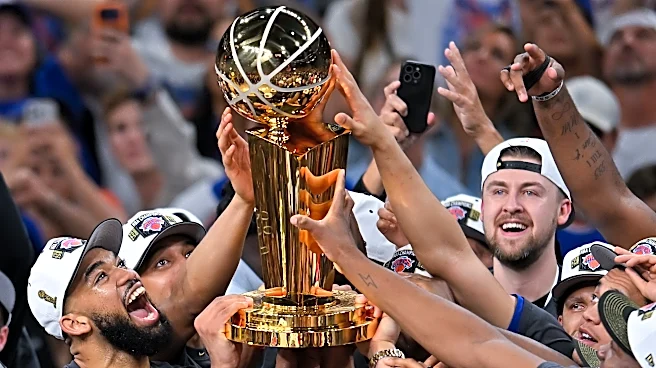
During the New York Knicks' championship parade, a mix-up occurred involving the retired jersey number of Patrick Ewing. Banners displayed outside City Hall in Manhattan mistakenly featured Ewing's No. 33 with the name of current Knicks player Dillon
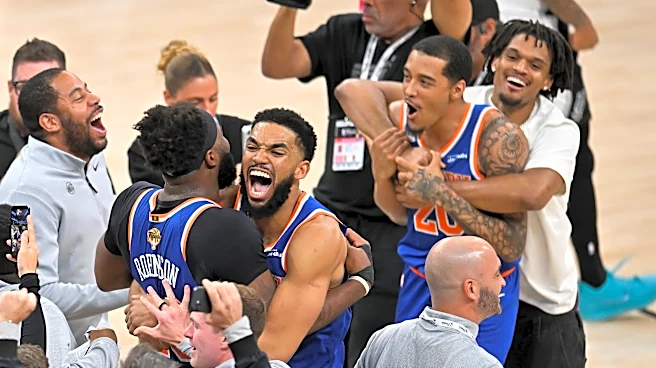
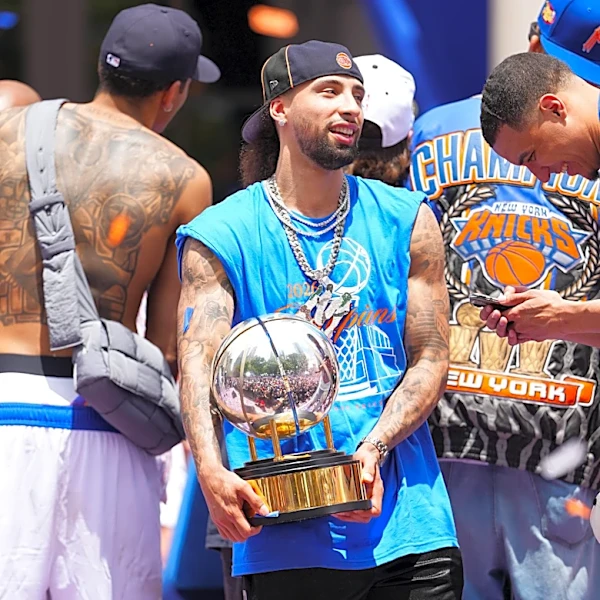
Jones. Jones, who played only seven games for the Knicks this season, typically wears No. 1. The error was attributed to an incorrect listing on the team's online roster, which showed Jones as wearing No. 33. Ewing, a legendary Knicks center, had his number retired in 2003 after a distinguished 15-year career with the team. The parade celebrated the Knicks' first NBA title in 53 years, with Ewing present but not commenting on the mix-up.
Why It's Important?
The mix-up highlights the importance of accuracy in public displays, especially during significant events like a championship parade. Patrick Ewing is a celebrated figure in Knicks history, and the error underscores the need for careful attention to detail in honoring sports legends. The incident also reflects on the administrative processes within City Hall and the Knicks organization, suggesting potential areas for improvement in communication and verification. For fans, the mistake may have been a minor distraction during a momentous occasion, but it serves as a reminder of the legacy and contributions of Ewing to the franchise.
What's Next?
While the immediate impact of the error may be limited, it could prompt the Knicks and City Hall to review their procedures for public events and ensure that similar mistakes are avoided in the future. The Knicks organization might take steps to correct the online roster inaccuracies that led to the confusion. Additionally, there may be discussions about how to better honor past players during celebrations, ensuring that their contributions are accurately represented. Fans and stakeholders may expect a formal acknowledgment or apology from the involved parties.
Beyond the Headlines
The incident raises questions about the preservation of sports history and the role of public institutions in maintaining the integrity of such legacies. It also touches on the cultural significance of sports figures like Patrick Ewing, whose contributions extend beyond the court. The mix-up could lead to broader conversations about how sports teams and cities honor their heroes, potentially influencing future practices in event planning and public recognition.