




What's Happening?
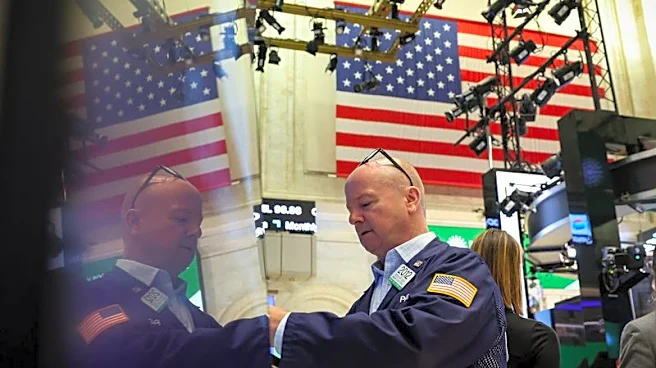
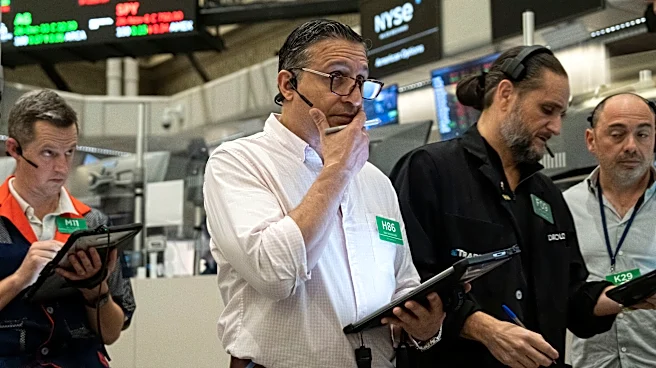
Following recent election results, the market experienced significant volatility, particularly impacting tech-heavy stocks and the semiconductor index. The Nasdaq fell more than 5%, marking its worst day since April 2025, while the semiconductor index dropped
over 12%. Some data center operators saw declines exceeding 14%. This downturn was primarily fueled by a leverage unwind, which manifested in two key areas: borrowed money funding data centers, whose profits are now perceived to be further out, and funds borrowed by hedge funds, margin accounts, and leveraged ETFs to invest in AI-related trades. Policies campaigned by winning Democrats, such as pausing data centers and curbing tax incentives, contributed to the market's reaction by potentially delaying revenue generation for data centers. This event is not an isolated incident, as similar leverage unwinds have occurred multiple times this year.
Why It's Important?
This market event underscores the inherent risks associated with high leverage in concentrated sectors, particularly in rapidly growing areas like artificial intelligence. The significant drop in the Nasdaq and semiconductor index highlights how political developments and policy changes can swiftly impact investor sentiment and trigger substantial market corrections. The reliance on borrowed capital by hedge funds and individual investors through margin accounts amplifies market movements, leading to rapid unwinds when confidence falters. This situation is critical for U.S. financial stability, as it demonstrates how leverage can transform political outcomes into widespread market volatility. The concentration of investment in AI names suggests a potential 'crowded trade,' where a large number of investors hold similar positions, making them vulnerable to sudden shifts. The impact on data center operators also points to the broader economic implications of policy decisions on infrastructure and technology investments.
What's Next?
Market participants will be closely monitoring several indicators to determine if the leverage unwind is nearing its end. Key factors include observing whether actual leverage is decreasing, as evidenced by lower hedge fund gross and net leverage, monthly FINRA margin debt, and leveraged ETF assets. Investors will also watch for panic gauges like the VIX and trading volumes to peak together, which could signal a market bottom. The stability of credit markets, specifically credit default swaps, will be crucial to ensure the stress does not spread beyond the leveraged corner. Furthermore, the market will assess if the damage remains contained within AI-related stocks or if non-AI stocks and banks begin to experience significant declines, which would indicate a more systemic issue. The potential for fund closures and capital returns will also be a sign of a market 'washout,' with concerns rising if lenders start incurring losses.
Beyond the Headlines
The recent market volatility due to leverage in AI stocks reveals deeper structural issues within the financial system, particularly the interplay between technological innovation, investment trends, and political policy. The rapid growth of AI has attracted substantial capital, leading to concentrated bets and increased leverage, which can create systemic vulnerabilities. This event highlights the ethical and regulatory challenges of managing speculative bubbles and ensuring market stability without stifling innovation. The influence of political campaigns on specific industries, such as data centers, demonstrates how policy debates can have immediate and tangible financial consequences. The repeated occurrence of leverage unwinds this year suggests a pattern of market behavior where periods of excessive risk-taking are followed by sharp corrections, prompting questions about the effectiveness of current regulatory frameworks in preventing such episodes and protecting investors from amplified losses.