
What's Happening?
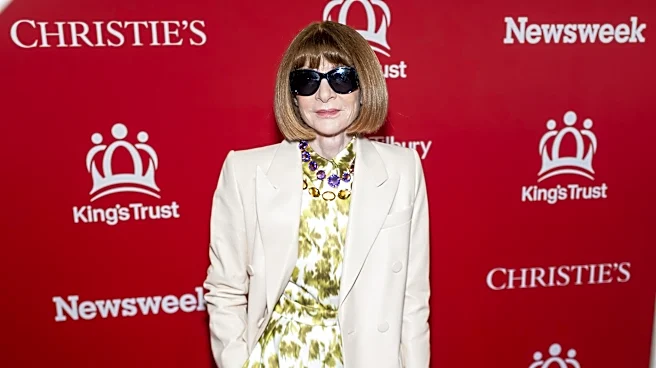
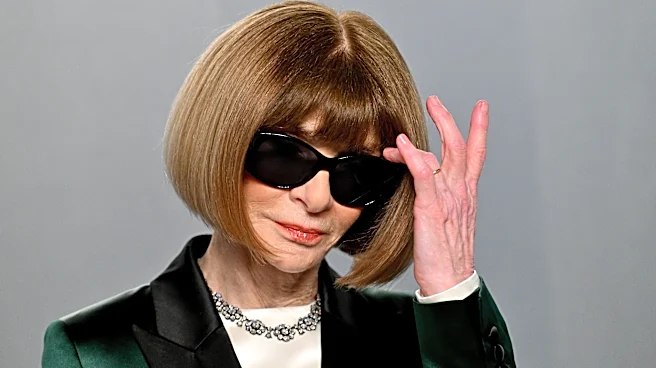
Anna Wintour, 75, has transitioned from her role as Editor-in-Chief of Vogue in 2025, with Chloe Malle, a Vogue editor since 2011, stepping into the position. Despite this change, Wintour will maintain
a significant presence at Condé Nast, continuing as the global editorial director and Chief Content Officer. In these capacities, she will oversee all 28 international editions of Vogue and co-chair the annual Met Gala. Malle will report directly to Wintour. Wintour's nearly four-decade tenure as Editor-in-Chief saw her become a pivotal figure in high fashion, known for her distinctive style and her influence in elevating designers like Marc Jacobs and Alexander McQueen. Her leadership also involved advocating for progress and accessibility within the fashion world, and she has been instrumental in mentoring numerous young professionals who now hold prominent editorial roles.
Why It's Important?
This leadership transition at Vogue marks a significant moment for the fashion industry, signaling a strategic shift for one of the most influential publications globally. Anna Wintour's continued role as global editorial director and Chief Content Officer ensures her enduring influence over Condé Nast's portfolio, which includes major magazines like Wired, Vanity Fair, and GQ. Her oversight of all international Vogue editions and the Met Gala means she will still shape global fashion narratives and philanthropic efforts. The appointment of Chloe Malle, known for her ability to engage modern audiences and drive digital growth, reflects the evolving media landscape where traditional print publications are adapting to digital consumption and economic pressures. This move aims to inject fresh perspectives while leveraging Wintour's vast experience and network, potentially setting a new direction for how high fashion content is created and disseminated in the digital age.
What's Next?
Chloe Malle's leadership is expected to focus on adapting Vogue to the contemporary media environment, particularly by emphasizing unique storytelling and digital engagement. Malle has already demonstrated success in increasing web traffic for Vogue's online editorials. Her strategy includes condensing the frequency of print issues to enhance their collectibility and prestige, while also utilizing higher-quality materials for physical copies to boost brand value. This approach aims to combat declining pre-tax profits experienced by Condé Nast's UK branch, which saw a 36% drop from £28 million in 2024 to £18 million in 2025. The transition also highlights a broader trend within Condé Nast, as CEO Roger Lynch stated in 2022 that the company is no longer solely a magazine company, focusing on expanding its digital footprint to capitalize on revenue and support high-quality print journalism.
Beyond the Headlines
The shift in leadership at Vogue, while retaining Anna Wintour in a powerful overarching role, reflects a complex interplay between tradition and innovation in the media industry. Wintour's legacy, often associated with both her iconic image and her demanding reputation, has profoundly shaped pop culture, even inspiring works like 'The Devil Wears Prada.' Her continued presence ensures a degree of continuity and stability, leveraging her extensive experience and influence. However, Malle's appointment signifies a strategic move towards a more digitally-native and audience-centric approach, crucial for navigating the challenges posed by social media and artificial intelligence. This transition also underscores the ongoing debate about privilege and meritocracy in high-profile industries, as Malle, a self-described 'nepo baby,' acknowledges her advantageous background while emphasizing her efforts to prove her capabilities. The outcome of this leadership evolution will likely influence how other legacy media publishers adapt to changing consumer habits and economic realities.