




What's Happening?
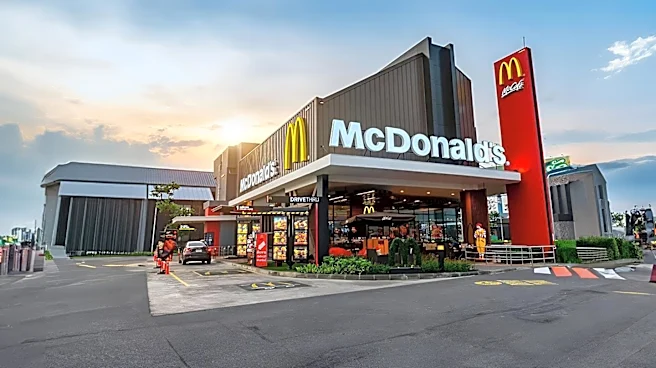
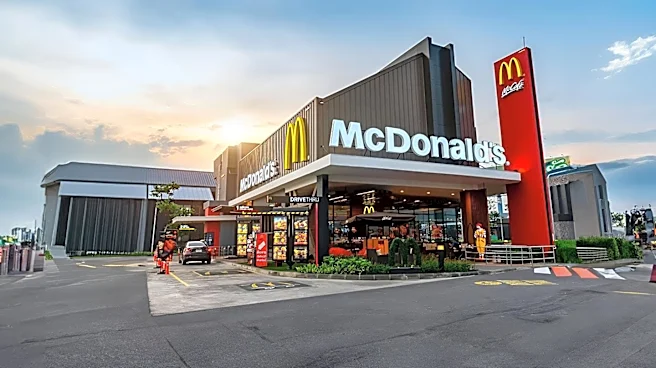
McDonald's is currently testing a new AI-powered ordering platform named ArchIQ, or 'Archy,' in five U.S. drive-thru locations. This system, developed in collaboration with Google, is designed to handle customer interactions, take orders, process requests,
display orders, and direct customers to the pickup window, effectively replacing human order-takers. The initiative is part of McDonald's broader 'NEXT' strategy, which aims to enhance growth and productivity by attracting more customers and improving unit economics. According to McDonald's, Archy has achieved over 90% accuracy in both English and Spanish during its September 2026 Investor Day report. This move comes as McDonald's CEO Chris Kempczinski emphasized the need to provide compelling value to customers, especially in an environment of unprecedented inflation, stating that the company must 'earn, and re-earn, each and every visit.' The 'NEXT' strategy also includes menu upgrades, improvements to in-store technology, and new store remodel prototypes.
Why It's Important?
The deployment of ArchIQ signifies a significant shift in the fast-food industry's approach to customer service and operational efficiency. For McDonald's, this AI integration could lead to reduced labor costs and increased speed of service, directly impacting its bottom line and potentially allowing for more competitive pricing strategies in the face of inflation. The success of ArchIQ could set a precedent for wider adoption of AI in drive-thrus across the U.S., influencing how consumers interact with fast-food establishments. While the system aims to improve customer experience through speed and accuracy, it also raises questions about job displacement for human order-takers. The emphasis on 'predictable value' by CEO Chris Kempczinski highlights the company's strategy to maintain customer loyalty during economic pressures, suggesting that efficiency gains from AI could be passed on to consumers through stable pricing or enhanced service.
What's Next?
McDonald's will continue to evaluate the performance of its ArchIQ system in the five pilot U.S. locations. The company's previous attempt at an AI-driven ordering platform with IBM in 2021 ultimately failed, but McDonald's expressed confidence in voice ordering solutions for drive-thrus. If the current testing proves successful and meets the company's objectives for accuracy and efficiency, a broader rollout of ArchIQ to more U.S. locations is likely. The 'NEXT' strategy, which encompasses ArchIQ, also includes ongoing efforts in menu upgrades and in-store technology improvements, indicating a continuous evolution of the McDonald's customer experience. Other fast-food chains, such as Wendy's and Yum! Brands, are also exploring or implementing AI ordering systems, suggesting a growing trend towards automation in the industry. This competitive landscape will likely drive further innovation and adoption of AI technologies in the coming years.
Beyond the Headlines
The integration of AI like ArchIQ into everyday consumer interactions, such as ordering fast food, represents a broader societal trend towards automation and artificial intelligence. While the immediate focus is on operational efficiency and cost savings for businesses, the long-term implications extend to the nature of work, consumer expectations, and the digital transformation of industries. The ethical considerations of AI, such as data privacy and algorithmic bias, will become increasingly relevant as these systems become more pervasive. Furthermore, the shift from human-to-human interaction to human-to-AI interaction in service roles could subtly alter social dynamics and customer service norms. The success of ArchIQ could also influence investment in AI research and development, potentially accelerating advancements in natural language processing and conversational AI, impacting various sectors beyond fast food.