







What's Happening?
JPMorgan Chase and Citigroup significantly increased their holdings in spot Bitcoin Exchange-Traded Funds (ETFs) during the third quarter. JPMorgan Chase boosted its iShares Bitcoin Trust (IBIT) holdings by 9.6%, adding approximately 1 million shares
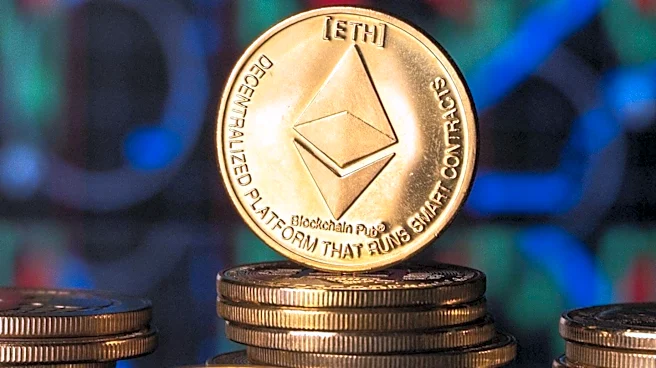
to reach a total of 11.41 million shares, valued at around $540 million. Concurrently, JPMorgan nearly exited its iShares Ethereum Trust (ETHA) position, reducing it from 1.17 million shares to just 399. Citigroup also expanded its Bitcoin ETF exposure, disclosing about $119 million in Fidelity’s Wise Origin Bitcoin Fund (FBTC) and increasing its IBIT shares by approximately 50%, from 347,000 to roughly 521,000. These moves are part of a broader trend among institutions, with disclosed spot Bitcoin ETF holdings totaling $5.25 billion across 1,389 institutions that filed third-quarter reports, of which banks held $258 million, or 4.9% of the total.
Why It's Important?
The increased investment in Bitcoin ETFs by major financial institutions like JPMorgan Chase and Citigroup signals a growing mainstream acceptance and integration of cryptocurrency assets into traditional investment portfolios. This trend could lend further legitimacy to Bitcoin as an asset class, potentially attracting more institutional and retail investors. For the U.S. financial market, this indicates a diversification of investment strategies and a recognition of digital assets' potential. The substantial capital allocation by these banks suggests a strategic move to capitalize on the evolving digital asset landscape, potentially influencing other financial entities to follow suit. This institutional embrace could also contribute to greater liquidity and stability in the cryptocurrency market, reducing its historical volatility and making it a more attractive option for long-term investment.
What's Next?
The continued accumulation of Bitcoin ETFs by major banks suggests a potential for further growth in institutional crypto adoption. As more financial institutions allocate capital to these products, it could lead to increased demand for Bitcoin and other digital assets. This trend might also prompt regulatory bodies to further refine frameworks for digital asset investments, ensuring market integrity and investor protection. The shift in holdings, particularly JPMorgan's near-exit from ETHA while increasing IBIT, indicates a strategic focus on specific digital assets within the ETF space. This could influence future product development in the ETF market, with a potential emphasis on Bitcoin-centric offerings. The overall impact could be a more mature and integrated digital asset market within the traditional financial system.
Beyond the Headlines
The growing institutional interest in Bitcoin ETFs, as evidenced by the actions of JPMorgan Chase and Citigroup, represents a significant step in the evolution of finance. It challenges traditional notions of asset allocation and risk management, pushing the boundaries of what constitutes a 'safe' or 'viable' investment. This trend could accelerate the convergence of traditional finance and decentralized technologies, leading to innovative financial products and services. Furthermore, the increased institutional presence might bring greater scrutiny to the underlying technology and market infrastructure of cryptocurrencies, potentially driving improvements in security, transparency, and efficiency. The long-term implications could include a redefinition of global financial markets, with digital assets playing a more central role in investment strategies and economic policy.