





What's Happening?
Global maritime trade is facing significant vulnerability due to disruptions at critical chokepoints, as highlighted by the Red Sea crisis and the Houthi threat to Bab el-Mandeb. The concentration within the shipping industry, where a small number of
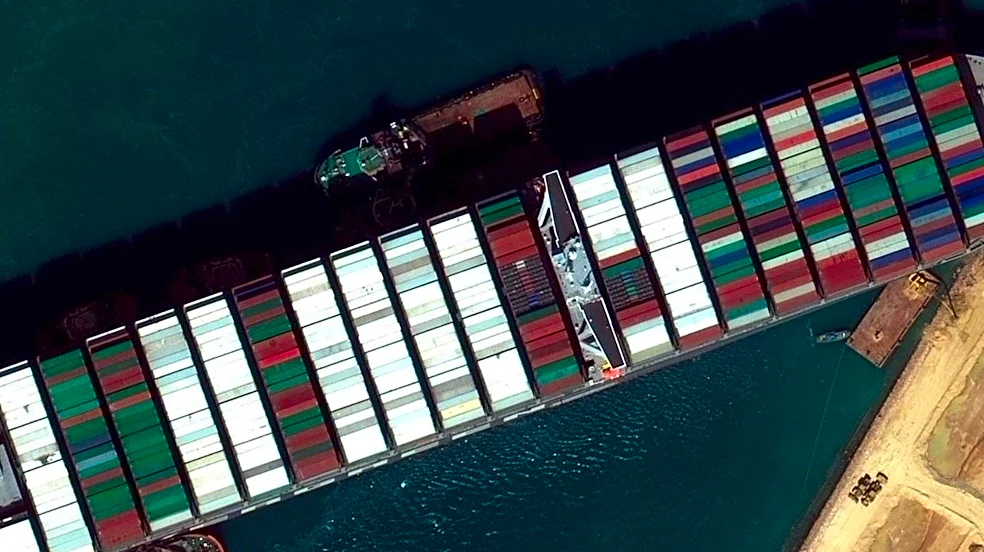
companies control a substantial share of container and oil-tanker traffic, amplifies this vulnerability. Rerouting ships around Africa due to threats, even if only by one company, impacts capacity, rates, and vessel availability globally. Ports experience a chain reaction, with off-schedule arrivals, mispositioned empty containers, and fluctuating workloads for crews. The crisis has shown that a strait does not need to be physically closed to become commercially unviable; the credible threat posed by the Houthis has raised risk premiums and created economic uncertainty. This has led to significant declines in traffic through the Suez Canal and Bab el-Mandeb, with container traffic falling by double-digit percentages and overall traffic volume halving by March 2024. The Port of Eilat, in particular, has suffered a prolonged economic and operational crisis, with vehicle traffic sharply declining and its share of vehicle imports from the East falling from 44% to about 15%.
Why It's Important?
The vulnerability of maritime chokepoints has far-reaching implications for the U.S. economy and global trade. Disruptions lead to increased freight costs, longer delivery times, and higher inventory costs for businesses, impacting consumer prices and supply chain reliability. The reliance on a few indispensable passages means that threats in one region can trigger a global ripple effect, affecting industries not directly associated with maritime security, such as manufacturing and pharmaceuticals. The crisis underscores the tension between efficiency and resilience in modern supply chains, demonstrating that maximizing efficiency in normal times can leave businesses fragile during emergencies. For the U.S., which depends on global trade for a wide range of goods, these disruptions can lead to inflationary pressures and potential shortages. The situation also highlights the importance of national security in safeguarding trade routes, as economic stability is intrinsically linked to the free flow of goods. The damage to ports like Eilat also limits diversification options for trade, making countries more dependent on specific routes that could face future threats.
What's Next?
The ongoing disruptions necessitate a multi-faceted response involving security, diplomacy, economics, and infrastructure. A broad, lasting naval coalition is needed to secure routes, provide intelligence, and actively defend against threats, moving beyond reactive presence to a layered defense strategy. This includes targeting the entire chain of capabilities of hostile actors, such as intelligence infrastructure and weapons stores, while complying with international law. Regional and diplomatic pressure will be crucial, with countries sharing a practical interest in restoring security to the Red Sea needing to establish mechanisms for intelligence sharing and dialogue. Enforcement measures, such as stepping up cargo inspections and strengthening targeted sanctions, are also required to cut off the flow of components and money to hostile groups. For countries like Israel, developing alternative land and air routes and reaching agreements with regional ports will be essential to maintain trade flows. The private sector will also need government assistance in dealing with maritime risks, including warnings, emergency insurance, and coordinated cargo priorities.
Beyond the Headlines
The crisis at maritime chokepoints reveals a deeper struggle over the regional and global maritime order, where freedom of navigation is increasingly contested. It highlights how non-state actors can leverage strategic geographic locations to exert significant economic and political pressure, blurring the lines between military and economic conflict. The situation challenges the long-held assumption that sea routes would remain readily available and inexpensive, forcing a re-evaluation of global economic models. The environmental consequences, such as increased emissions from longer routes and the risk of oil spills, add another layer of complexity, linking geopolitical instability to climate concerns. This ongoing struggle demands a comprehensive doctrine that integrates maritime defense, intelligence, insurance policy, regional diplomacy, infrastructure planning, and cognitive management. The ability to convince market participants that risks can be managed, rather than merely thwarting attacks, will be key to sustaining confidence in global trade and ensuring economic resilience in an era of persistent threats.