


What's Happening?
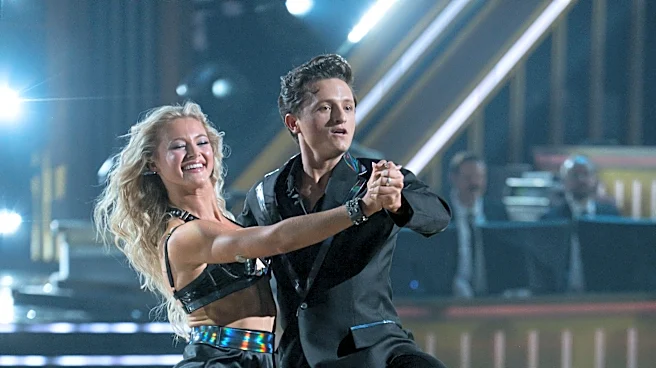
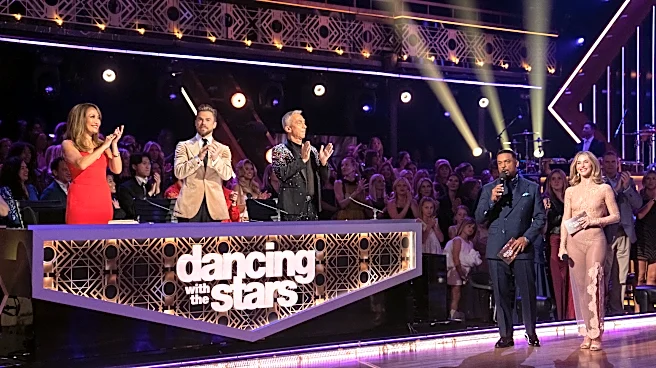
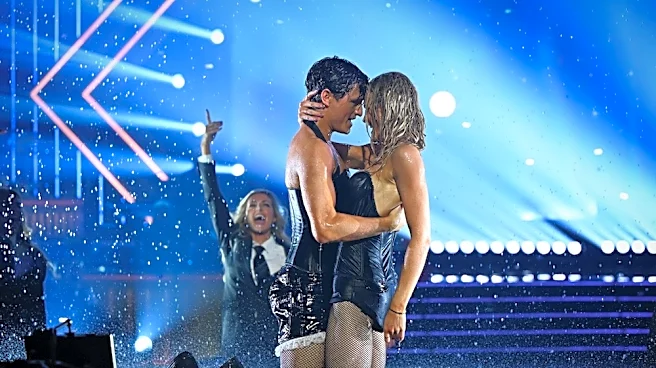
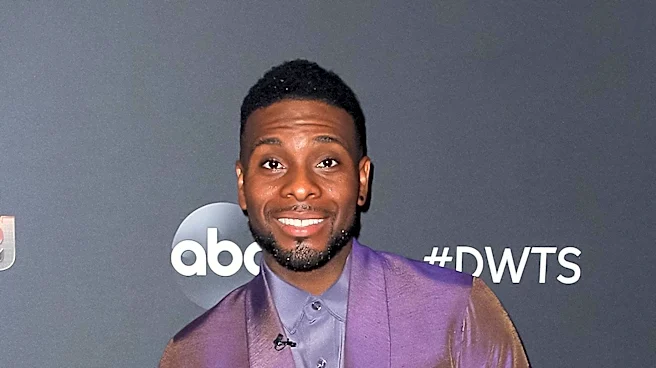
Comedian Connor Wood faced significant backlash from online viewers after his freestyle performance in the 'Dancing With the Stars' Season 35 finale. Wood, alongside his professional partner Rylee Arnold, recreated Tom Holland's viral 'Umbrella' routine
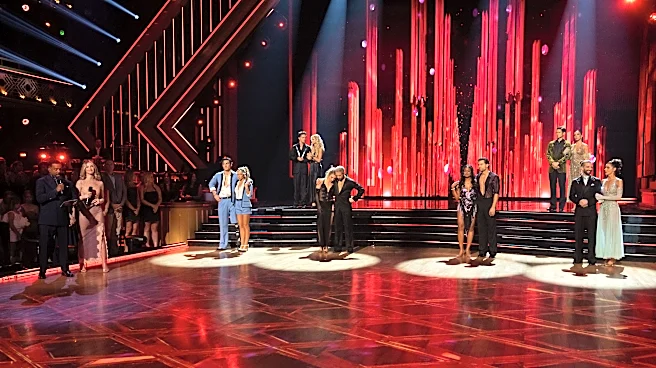
from 'Lip Sync Battle'. The performance began with Wood in a black suit dancing to Gene Kelly's 'Singin' in the Rain', transitioning into Rihanna's 'Umbrella' with umbrella props, partner lifts, and a costume change into a black corset, hot pants, and fishnet tights, mirroring Holland's original outfit. Despite receiving 29 out of 30 points from the judges, who made lighthearted comments, many online viewers criticized the performance for lacking originality and being an inferior imitation of Holland's dance, citing Holland's extensive dance training. Wood finished third in the competition, which was won by Paralympian Ezra Frech.
Why It's Important?
This event highlights the challenges and risks associated with recreating iconic pop culture moments in competitive performance settings. While such tributes can sometimes resonate positively, Wood's experience demonstrates that direct imitation, especially of a highly acclaimed and technically demanding performance, can lead to negative public reception. The strong online reaction underscores the audience's value for originality and authentic talent, particularly in a show like 'Dancing With the Stars' where dance skill is paramount. The criticism also reflects the enduring impact of Tom Holland's original performance, setting a high bar that proved difficult to meet. For reality TV contestants, this incident serves as a cautionary tale about balancing homage with personal artistic expression to avoid accusations of unoriginality.
What's Next?
Following the public scrutiny, Connor Wood has indicated that he is not suited for public scrutiny and that this will be his last reality show. This suggests a potential shift in his career focus away from high-profile, competitive reality television. For 'Dancing With the Stars', the incident might prompt future contestants and producers to consider the implications of directly replicating famous performances, potentially encouraging more original choreography or interpretations. The strong fan reactions could also influence how viewers engage with similar tribute performances in future seasons, fostering a more critical eye towards originality versus imitation. The broader entertainment industry may also take note of the audience's strong preference for unique content over direct recreations.
Beyond the Headlines
The controversy surrounding Connor Wood's performance touches upon broader themes of artistic ownership, originality, and the nature of tribute in popular culture. While homage is a common practice, the intense negative reaction suggests a line was crossed, where the performance was perceived as a mere copy rather than an inspired interpretation. This raises questions about the ethical boundaries of artistic recreation, especially when the original performance is deeply ingrained in public memory and associated with a performer's unique skill set. Furthermore, the incident reflects the power of social media in shaping public opinion and the immediate, often unforgiving, nature of online criticism for public figures. It also highlights the pressure on reality TV contestants to deliver memorable performances, sometimes leading to choices that backfire under intense public scrutiny.