



What's Happening?
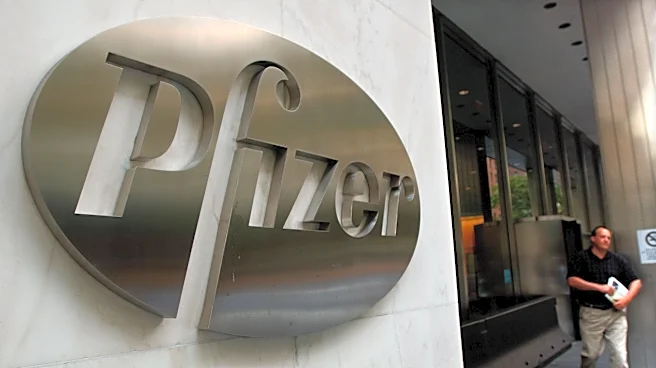
Albert Bourla, CEO of Pfizer, stated at the Jefferies Global Healthcare Conference that Chinese manufacturers are projected to become Pfizer's primary competitors by 2030, surpassing current rivals like AstraZeneca and Lilly. Bourla noted that Chinese companies
operate at half the cost and three to four times the speed of established pharmaceutical firms. To maintain competitiveness, Pfizer aims to match these levels of efficiency. He also highlighted Artificial Intelligence (AI) as the crucial tool for achieving significant cost reductions and accelerating drug development. Bourla anticipates AI's initial impact will be in supporting functions, leading to increased productivity across all cost bases. Pfizer plans to leverage these efficiency gains to expand its operations, aiming to 'do more with less.' Regarding policy, Bourla discussed the Multi-Fiber Arrangement (MFN), viewing it as a mechanism to alleviate pressure concerning drug price disparities in the U.S., and believes that international reference pricing will continue regardless of political administration.
Why It's Important?
This outlook from Pfizer's CEO signals a significant shift in the global pharmaceutical landscape, indicating that U.S. and European pharmaceutical giants will face intensified competition from emerging Chinese players. The emphasis on matching Chinese companies' cost-effectiveness and speed underscores a potential transformation in how drug development and manufacturing are approached globally. For the U.S. pharmaceutical industry, this could mean increased pressure to innovate more rapidly and reduce operational costs, potentially leading to more affordable medications but also job reconfigurations as AI integration progresses. The continued focus on international reference pricing, irrespective of political party, suggests that drug pricing pressures in the U.S. are likely to persist, impacting pharmaceutical companies' revenue models and potentially influencing R&D investments. This competitive shift could also drive greater adoption of advanced technologies like AI across the sector to maintain market share and innovation leadership.
What's Next?
Pfizer's strategic focus will likely involve aggressive investment in AI technologies to streamline drug discovery, development, and operational processes. This could lead to partnerships with AI firms or significant internal restructuring to integrate AI capabilities across various departments, particularly in enabling functions. The company will also need to closely monitor the advancements and market penetration of Chinese pharmaceutical companies, potentially adjusting its global market strategies to counter this emerging competition. Furthermore, Pfizer's pursuit of the anti-obesity medication (AOM) market, with a focus on a monthly dosing frequency, indicates a push for differentiation in rapidly growing therapeutic areas. The ongoing SWITCH study will be critical in demonstrating the efficacy and patient acceptance of their AOM offering. The broader pharmaceutical industry may follow Pfizer's lead in adopting AI and re-evaluating cost structures to remain competitive in a market increasingly influenced by global cost pressures and technological advancements.
Beyond the Headlines
The anticipated rise of Chinese pharmaceutical companies as major competitors highlights a broader trend of shifting global economic power and technological advancement. This competition is not merely about market share but also about the fundamental models of drug development and delivery. The 'half the cost, 3, 4 times the speed' model presented by Chinese firms challenges the traditional, often lengthy and expensive, Western pharmaceutical R&D paradigm. This could lead to a re-evaluation of intellectual property protections and regulatory frameworks globally, as countries balance innovation incentives with access to affordable medicines. The extensive integration of AI, while promising efficiency, also raises ethical considerations regarding job displacement within the pharmaceutical sector and the potential for algorithmic biases in drug discovery. The long-term implications could include a more democratized access to advanced medicines globally, but also increased pressure on established pharmaceutical companies to adapt or risk losing their market dominance.