



What's Happening?
Seattle Seahawks fans are expressing significant frustration with new owner Vinod Khosla, who they perceive as making 'tone deaf' comments to the media regarding the team's future. Khosla's remarks, particularly his use of the phrase 'right now' when
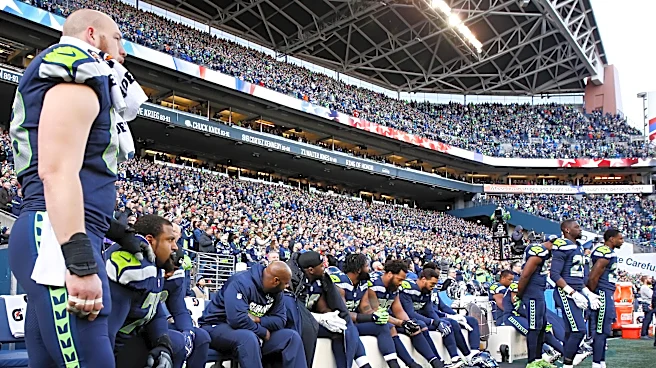
discussing the team's location in Seattle, have led fans to believe he is not fully committed to keeping the Seahawks in the city. This contrasts sharply with the previous ownership under Jody Allen, who maintained a silent public presence. Fans are accustomed to an ownership that did not publicly speculate about the team's long-term location. Khosla has stated, "I've not made any plans or even discussed – I know the press like to make a big deal of it. We're very happy with both the team and the location right now." However, the inclusion of 'right now' has fueled speculation and concern among the fanbase, leading to widespread criticism on social media platforms like X.
Why It's Important?
The ongoing public discourse surrounding Vinod Khosla's comments is significant for the Seattle Seahawks franchise and its dedicated fanbase. The perceived lack of commitment to Seattle could erode fan trust and loyalty, which are crucial for sustained support and revenue. The Pacific Northwest is a substantial sports market, and the Seahawks have a deep-rooted history and strong community ties in Seattle. Any suggestion of a potential relocation, even if indirect, can negatively impact season ticket sales, merchandise revenue, and local sponsorships. For the new ownership, failing to connect with the fanbase and address their concerns directly could lead to a challenging transition period and potentially affect the team's public image and market value. The situation highlights the delicate balance between business interests and community sentiment in professional sports ownership.
What's Next?
The immediate future will likely see continued scrutiny of Vinod Khosla's public statements regarding the Seattle Seahawks' long-term location. Fans and local media will be looking for clearer, more definitive assurances from the new ownership about their commitment to Seattle. Khosla may need to issue a more direct statement or engage in public relations efforts to mend the relationship with the fanbase. The team's performance on the field could also influence public perception, but the underlying concern about relocation will likely persist until a more concrete stance is communicated. The situation could also prompt local political leaders or community groups to voice their support for keeping the team in Seattle, potentially putting pressure on the ownership to clarify their intentions.
Beyond the Headlines
This situation extends beyond simple fan dissatisfaction, touching upon the broader implications of sports franchise ownership and community identity. Professional sports teams often serve as significant cultural anchors for cities, and any threat of relocation can trigger strong emotional and economic responses. The incident underscores the power of public perception and the impact of seemingly minor linguistic choices by owners. It also highlights a generational shift in sports ownership, where new owners may be more vocal and engaged with media, contrasting with traditional, more reserved approaches. This shift can lead to increased transparency but also greater vulnerability to public criticism, especially when comments are perceived as ambiguous or insensitive to local sentiment. The long-term stability of the team's presence in Seattle could become a recurring theme, influencing future stadium negotiations and community engagement initiatives.