






What's Happening?
Tiger Global Management, LLC, through its Singapore-based Internet Fund VI, has significantly reduced its stake in Billionbrains Garage Ventures, the parent company of the Indian online stockbroker Groww. The investment firm sold 17.07 crore shares, equivalent
to 2.72% of Groww's share capital, in the open market between May 29 and November 23, 2026. This series of transactions has decreased Tiger Global's holding from 5.08% to 2.35%. The largest single sale involved 5.2 crore shares on November 23, 2026. These sales were disclosed to the NSE and BSE in a filing dated November 25, 2026, under Regulation 29(2) of the SEBI takeover regulations. Tiger Global is a non-promoter shareholder, and the filing did not specify sale prices, buyers, or the reasons behind these divestments. Other early investors, such as Ribbit Capital entities, have also trimmed their stakes in Groww.
Why It's Important?
The reduction of Tiger Global's stake in Groww, a prominent Indian fintech company, signals a common trend among pre-IPO venture investors as lock-in periods expire. These stake sales are crucial for widening the free float of shares, making them more accessible to institutional buyers. For listed fintech companies, such divestments serve as a test of long-term demand from mutual funds and foreign investors as early backers exit. The exits occur in an increasingly competitive broking market in India, where Angel One has surpassed Zerodha as the second-largest broker. Additionally, a recent consumer commission order in Bengaluru directed Groww to refund ₹11.85 lakh due to a portfolio glitch, adding another layer of scrutiny to the market. The actions of major investment firms like Tiger Global can influence investor sentiment and market dynamics within the burgeoning Indian fintech sector.
What's Next?
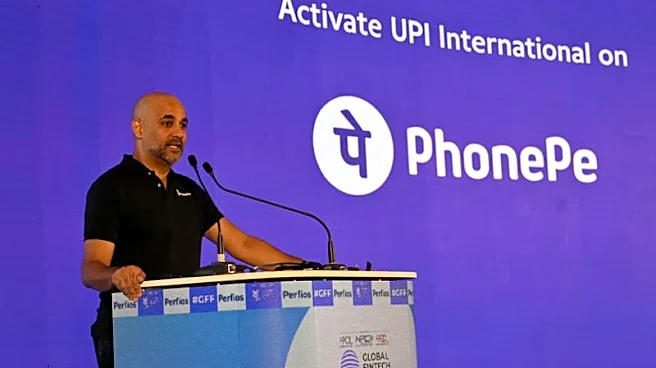
The trend of early investors trimming stakes in Indian fintech companies is expected to continue as more firms mature and their lock-in periods expire. This will likely lead to increased free float in the market, potentially attracting a broader range of institutional investors, including domestic and global funds. The pipeline for fintech listings in India remains robust, with companies like PhonePe and Razorpay, both of which count Tiger Global among their investors, having revived or received approval for their IPO plans in 2027. These upcoming listings will further test the market's capacity to absorb new offerings and the long-term demand from institutional investors. The ongoing competitive landscape in the Indian broking market, coupled with regulatory oversight, will continue to shape the strategies of fintech companies and their investors.
Beyond the Headlines
The divestment by Tiger Global and other early investors in Groww highlights a broader shift in the investment lifecycle of venture-backed companies, particularly in emerging markets like India. While these sales are a normal part of the investment cycle, they also underscore the evolving risk-reward calculus for venture capital firms. The lack of disclosed reasons for the sales by Tiger Global could lead to speculation about the firm's long-term outlook on Groww or its broader investment strategy in the Indian fintech space. This development also brings into focus the increasing maturity of the Indian fintech ecosystem, where companies are moving from early-stage funding to public market scrutiny. The ability of these companies to attract and retain long-term institutional investment after initial venture backing will be a critical indicator of the sector's sustained growth and stability.