




What's Happening?
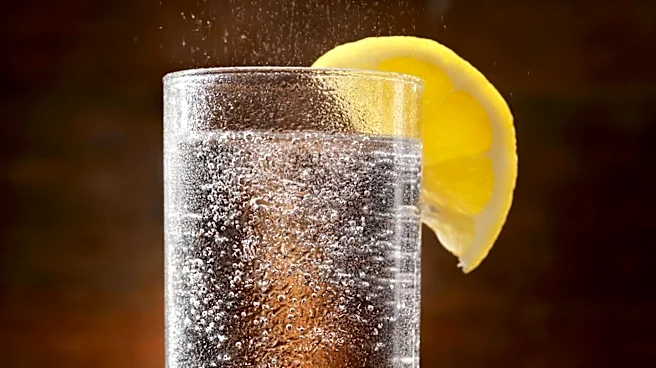
Club soda is being recognized for its versatility in creating a range of non-alcoholic drinks, as detailed in various recipes. Unlike seltzer, club soda contains added mineral salts that subtly enhance flavors, particularly citrus. It is a key ingredient
in non-alcoholic concoctions such as the Grapefruit Lemonade, which balances grenadine syrup with grapefruit juice, and the Lime Fizz, made simply with Rose’s lime juice and soda. Older soda-fountain formulas like Honey Lemonade and Lemon Squash also utilize club soda. The Egg Cream, a classic non-alcoholic drink, relies on very cold club soda poured hard to create its signature foamy head, demonstrating the importance of carbonation in texture.
Why It's Important?
The emphasis on club soda's role in non-alcoholic drinks is important because it highlights an accessible and versatile ingredient for creating refreshing beverages without alcohol. This caters to a growing consumer demand for non-alcoholic options, whether for health reasons, personal preference, or designated driving. By detailing how club soda interacts with other ingredients, such as enhancing citrus flavors or creating foam, it empowers individuals to experiment with home mixology. This also underscores the subtle differences between carbonated waters like club soda, seltzer, and mineral water, educating consumers on how to choose the best mixer for their desired drink profile. The focus on non-alcoholic options promotes inclusivity in social settings.
What's Next?
The increasing recognition of club soda's versatility could lead to more innovative non-alcoholic drink recipes and a greater focus on premium club soda products in the market. Bartenders and home mixologists may explore more complex flavor combinations using club soda as a base. This trend could also encourage beverage companies to develop new non-alcoholic mixers that leverage the unique properties of club soda. Educational content on the nuances of carbonated waters is likely to expand, helping consumers make more informed choices for their drinks. The demand for sophisticated non-alcoholic options will continue to drive creativity in the beverage industry.
Beyond the Headlines
The detailed explanation of club soda's properties and its use in non-alcoholic drinks goes beyond simple recipes, touching upon the science of carbonation and flavor enhancement. It illustrates how seemingly minor ingredients can significantly impact the sensory experience of a beverage. This focus on the technical aspects of drink preparation can foster a deeper appreciation for mixology as an art and a science. Furthermore, the promotion of non-alcoholic options contributes to a broader cultural shift towards healthier lifestyles and more inclusive social gatherings, where diverse drink choices are readily available and celebrated.