
What's Happening?
A growing trend sees brides repurposing their mothers' wedding gowns for their own ceremonies or related events, according to Eva Dixon, owner of I Do Designs by Eva. This practice, which has gained significant
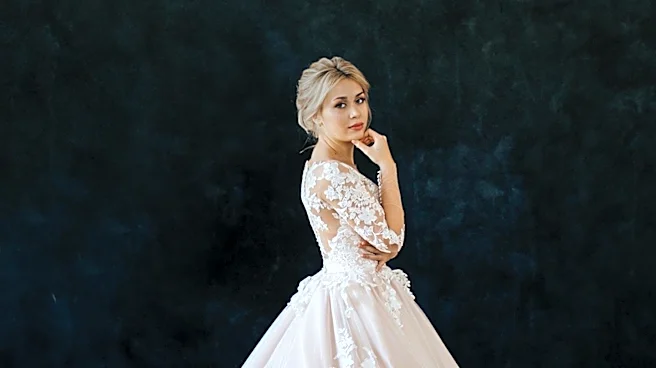
traction over the past five to six years, involves redesigning vintage dresses to suit modern tastes while retaining sentimental value. For instance, Rachel Rodgers wore her mother's 1987 satin gown, updated with delicate cap sleeves, for her August 2025 wedding. Similarly, Nicole Lakovic transformed her mother's 1991 wedding dress into a modernized short dress for her bridal shower, removing shoulder pads and long lace sleeves. These transformations often involve significant alterations, such as changing necklines, reshaping skirts, or creating entirely new designs from the original fabric, with costs ranging from a few hundred to about $1,500.
Why It's Important?
This trend reflects a shift in wedding planning, influenced by factors such as rising wedding costs and a desire for unique, personalized celebrations. The repurposing of wedding gowns offers a cost-effective alternative to purchasing new dresses, which can be a significant expense in wedding budgets. Beyond financial considerations, it provides a deeply personal way for brides to honor their mothers and incorporate family history into their special day, fostering a unique intergenerational connection. The increased visibility of such ideas on social media platforms like TikTok, Instagram, and Pinterest has further fueled this movement, encouraging brides to explore creative and sustainable options for their wedding attire. This practice also highlights the enduring quality of some vintage garments, as most older gowns can still be successfully reconstructed if the fabric is in good condition.
What's Next?
The trend of redesigning mothers' wedding gowns is likely to continue expanding, driven by ongoing economic pressures and the desire for personalized, meaningful wedding experiences. Bridal designers and seamstresses specializing in alterations, like Eva Dixon, can expect increased demand for their services as more brides seek to transform vintage dresses. This could lead to further innovation in gown redesign techniques and a broader acceptance of non-traditional wedding attire. Additionally, the sentimental value attached to these gowns suggests that this practice may become a cherished family tradition, with redesigned dresses potentially being passed down and re-envisioned by future generations, as seen with Nicole Lakovic's sister planning to wear the redesigned dress for her own bridal events.
Beyond the Headlines
Beyond the immediate practical and sentimental benefits, this trend touches upon broader cultural shifts towards sustainability and conscious consumption. By reusing and redesigning existing garments, brides are implicitly participating in a more environmentally friendly approach to fashion, reducing the demand for new production and minimizing waste. This aligns with a growing societal emphasis on sustainability across various industries. Furthermore, the act of transforming a mother's wedding gown into a contemporary piece symbolizes a blending of tradition and modernity, reflecting how individuals navigate their heritage while embracing current styles and values. It underscores the emotional power of clothing as a vessel for memory and connection, transcending mere aesthetics to become a tangible link between past and present generations.