






What's Happening?
A significant development has occurred in the WWE merger lawsuit, moving it closer to resolution. The lawsuit, filed in November 2023 by institutional investors, alleged that former WWE Chairman Vince McMahon and several senior executives breached their
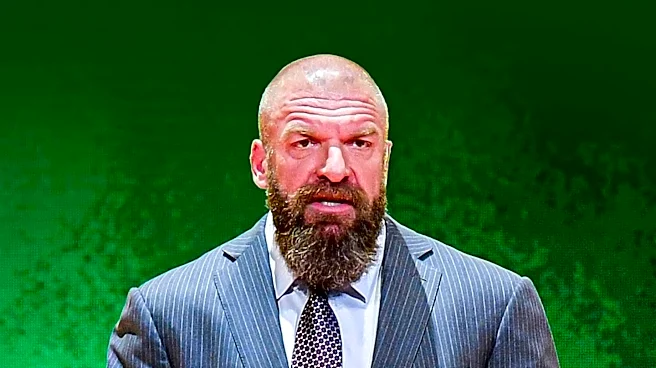
fiduciary duties during the sale of WWE to Endeavor. This sale, valued at $9.3 billion, led to the formation of TKO Group Holdings through the merger of WWE and Zuffa, UFC’s parent company. Plaintiffs claimed that McMahon pre-selected Endeavor, bypassing other potentially higher bids from competitors like Liberty Media and KKR, to secure a leadership role and legal immunity amidst his ongoing lawsuits. The lawsuit settlement has now been submitted to court, with plaintiffs, represented by Block & Leviton LLP and Bernstein Litowitz Berger & Grossmann LLP, seeking up to 33% of a $147.5 million settlement from defendants including Vince McMahon, WWE President Nick Khan, Paul Levesque (Triple H), George Barrios, and Michelle Wilson. The final net settlement, after fees and administrative costs, is expected to be around $100 million, which will be distributed to shareholders.
Why It's Important?
This lawsuit and its impending settlement are crucial for several reasons within the U.S. business and sports entertainment landscape. Firstly, it highlights the complexities and potential legal challenges involved in major corporate mergers, especially when allegations of fiduciary duty breaches arise. The substantial settlement amount underscores the financial implications for companies and their executives when such claims are validated or settled. For WWE and TKO Group Holdings, resolving this lawsuit can remove a significant legal overhang, potentially stabilizing investor confidence and allowing the new entity to focus on its operational strategies without the distraction of ongoing litigation. Shareholders, who are the direct beneficiaries of the settlement, stand to recover a portion of their perceived losses, which could influence future investment decisions in similar corporate transactions. The involvement of high-profile executives like Paul Levesque also brings scrutiny to corporate governance practices within large entertainment organizations, potentially leading to enhanced transparency and accountability measures in future deals.
What's Next?
The next step involves the court's approval of the submitted settlement. While the plaintiffs are seeking up to 33% of the $147.5 million, the final amount could fluctuate based on accrued interest while the funds are held in escrow. Once approved, the net settlement fund, estimated at around $100 million after various costs, will be distributed to the eligible shareholders. It remains uncertain whether Stephanie McMahon, who held significant equity but was not named as a defendant, will be excluded from the settlement, given her familial ties to Vince McMahon and Paul Levesque. This resolution will likely close a chapter on the legal challenges stemming from the WWE-Endeavor merger, allowing TKO Group Holdings to move forward with its business objectives. The outcome could also set a precedent for how similar corporate transactions are scrutinized and how executive conduct during mergers is evaluated in the future.
Beyond the Headlines
Beyond the immediate financial and legal implications, this settlement touches upon deeper issues of corporate ethics and accountability in the U.S. business environment. The allegations that Vince McMahon prioritized personal interests, such as securing a leadership role and legal immunity, over maximizing shareholder value, raise questions about the ethical responsibilities of corporate leaders during major transactions. The lawsuit's focus on fiduciary duties underscores the legal framework designed to protect shareholder interests, and the settlement reinforces the idea that executives can be held financially accountable for perceived breaches. This case could influence how future mergers are structured and negotiated, potentially leading to more rigorous oversight by independent board members and increased transparency in the decision-making process. It also highlights the ongoing evolution of corporate governance standards in the entertainment industry, where the lines between personal and corporate interests can sometimes become blurred, especially in companies with long-standing family leadership.