
What's Happening?
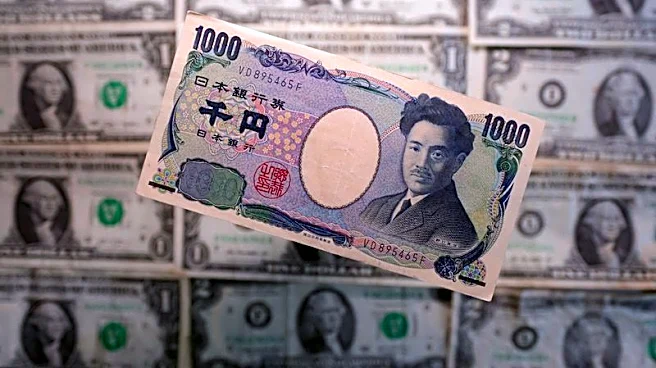
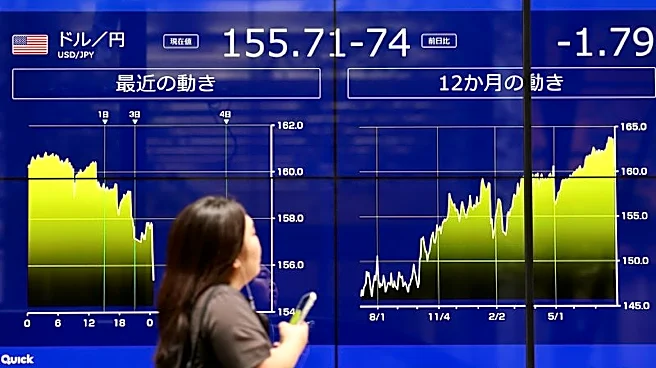
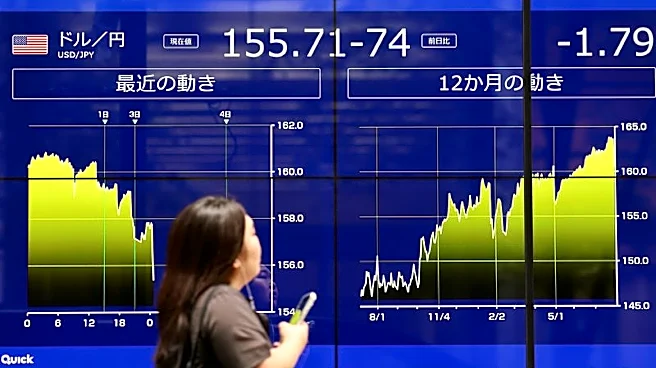
Bank of America has revised its year-end forecast for the dollar against the yen, lowering it from 152 to 149. This adjustment comes in response to coordinated intervention by US and Japanese authorities
aimed at supporting the yen. The bank's analysts, including Shusuke Yamada, suggest that this intervention marks a turning point for the currency pair, with the yen expected to strengthen by approximately 6% from current levels. The intervention is seen as a significant move that raises expectations for further macroeconomic policy actions, particularly from the Bank of Japan (BOJ), which may need to accelerate its rate hiking timeline to sustain the yen's gains.
Why It's Important?
The adjustment in Bank of America's forecast for the dollar/yen exchange rate highlights the impact of international monetary policy coordination on currency markets. The intervention by US and Japanese authorities is a strategic move to stabilize the yen, which has implications for global trade and economic relations. A stronger yen could affect Japanese exports, impacting industries reliant on international trade. Additionally, the expectation of faster BOJ rate hikes could influence global financial markets, as investors adjust their strategies based on anticipated changes in interest rates. This development underscores the interconnectedness of global economies and the importance of coordinated policy actions in managing currency fluctuations.
What's Next?
The focus will now be on the Bank of Japan's upcoming policy decisions, particularly regarding interest rate hikes. A rate increase in September, as suggested by Bank of America, could reinforce the credibility of the intervention and support the yen's appreciation. Market participants will closely monitor BOJ commentary and any further signs of coordinated intervention. The outcome of these policy actions will be crucial in determining the yen's trajectory and the broader implications for international financial markets. The success of the intervention will depend on the BOJ's ability to balance inflation risks with currency stability.