


What's Happening?
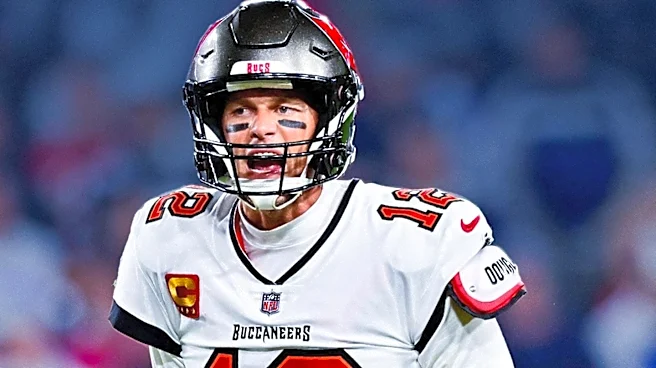
The dual roles of Tom Brady as a part-owner of the Las Vegas Raiders and Troy Aikman as a consultant for the Miami Dolphins, while both serving as top game analysts for Fox and ESPN respectively, are creating potential conflict-of-interest issues within
the NFL. The league has not explicitly prevented these arrangements, leading to a situation where both the Raiders and Dolphins benefit from their unique access to league information and personnel. For instance, a Seahawks source suggested that the Raiders' hiring of Klint Kubiak as head coach was influenced by Brady's access to Kubiak through his Fox broadcasting duties. Similarly, Aikman acknowledged that the Dolphins leverage his relationships and information gained through his broadcasting role. This access allows Brady and Aikman to evaluate coaches and players in ways that other teams cannot replicate, giving their respective teams an unfair advantage in personnel decisions and strategic planning.
Why It's Important?
This situation is highly significant for the competitive balance and integrity of the NFL. The unique access afforded to the Raiders and Dolphins through Brady and Aikman's broadcasting roles creates an uneven playing field. Other teams do not have the same opportunity to 'interview' potential coaches or evaluate players in informal settings, which can be crucial for making informed decisions. This could lead to a perception of favoritism or unfair advantage, potentially eroding trust among franchises and impacting the league's overall credibility. The NFL's apparent reluctance to address these conflicts directly suggests a prioritization of star power and media relationships over strict adherence to competitive fairness. If the Raiders or Dolphins achieve consistent success, the issue is likely to escalate, prompting other teams to demand intervention from the league. This scenario highlights the complex interplay between media, business, and sports, where personal connections and influence can significantly impact team operations and outcomes.
What's Next?
Currently, the NFL has not indicated any immediate plans to alter the arrangements for Tom Brady or Troy Aikman. The issue is expected to remain a point of contention, particularly if the Raiders or Dolphins begin to consistently perform well. Should either team achieve significant success, other NFL franchises are likely to intensify their calls for the league to address the perceived conflict of interest. This could lead to a re-evaluation of league policies regarding team ownership, consulting roles, and media responsibilities for prominent figures. The NFL might eventually be compelled to establish clearer guidelines or restrictions to ensure competitive fairness. Until then, the Raiders and Dolphins will continue to benefit from the unique insights and access provided by Brady and Aikman, potentially influencing their strategic decisions and player acquisitions in the coming seasons.
Beyond the Headlines
The situation with Brady and Aikman underscores a deeper ethical dilemma within professional sports, where the lines between media, business, and team operations are increasingly blurred. The allure of celebrity and the financial benefits of media partnerships often complicate efforts to maintain strict competitive integrity. This scenario raises questions about the long-term implications for the league's governance and its ability to enforce fair play. It also highlights the power dynamics at play, where influential figures can navigate existing rules to their advantage. The precedent set by these arrangements could encourage other former players or media personalities to seek similar dual roles, further entangling the various facets of the sports industry. Ultimately, the NFL faces a challenge in balancing the commercial appeal of its stars with the fundamental principle of fair competition, a balance that will likely continue to be tested as the league evolves.