




What's Happening?
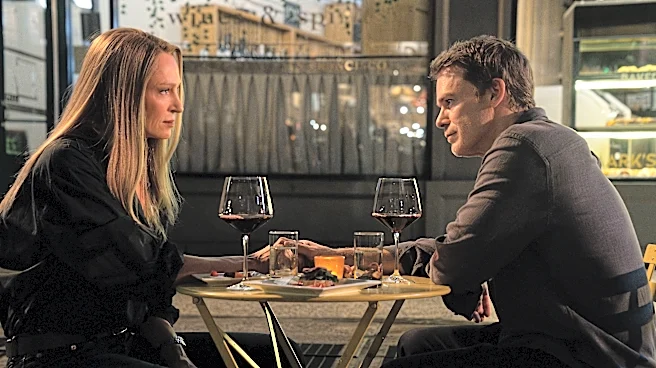
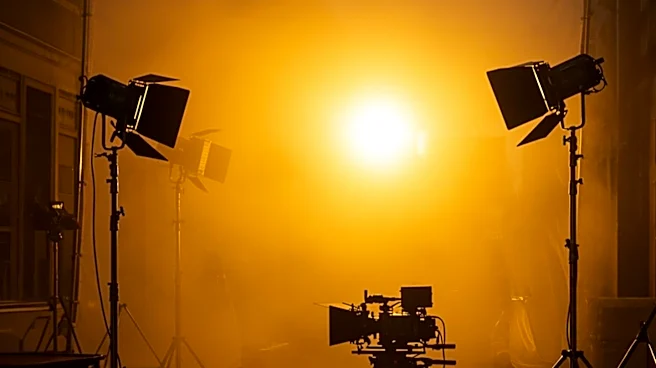
Gaffer Ryan Webb utilized Astera lighting technology to craft the distinct visual language for the first season of 'Dexter: Resurrection,' the revival series starring Michael C. Hall. The show transitions Dexter Morgan from Miami's sunny backdrop to the darker,
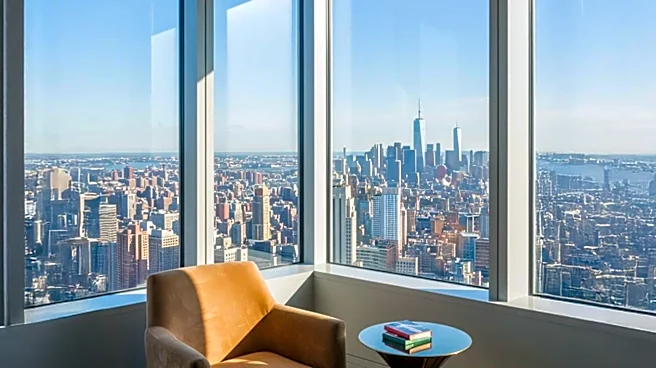
grittier streets of New York City. Webb's approach emphasized shadow, contrast, and moody detail to reflect this change. Astera LEDs, including Titan Tubes, Hyperion Tubes, and LunaBulbs, were instrumental in lighting various locations, from the Empire Hotel kitchen to opulent penthouses and the show's signature 'kill rooms.' Webb's local knowledge of New York City was crucial in adapting the lighting to historic and architecturally sensitive locations, ensuring both verisimilitude and the desired atmospheric effect.
Why It's Important?
The meticulous lighting design in 'Dexter: Resurrection' highlights the critical role of cinematography in establishing a show's tone and narrative. The shift from Miami's bright palette to New York's darker aesthetic is not merely cosmetic but serves to underscore Dexter's changed circumstances and internal state. For the television production industry, this demonstrates how advanced lighting technologies like Astera LEDs offer versatility and precise control, enabling gaffers to achieve complex visual effects and adapt to challenging environments, such as historic buildings with strict rigging limitations. The successful integration of lighting to enhance storytelling, particularly in creating the unsettling atmosphere of 'kill rooms' and the contrast between Dexter's public and private personas, showcases the technical and artistic demands of high-quality television production.
What's Next?
The second season of 'Dexter: Resurrection' is scheduled to premiere on Showtime in October. Gaffer Ryan Webb has indicated that Astera lighting will continue to play a significant role, with the technology appearing early in the season's opening sequence, specifically in the first 'kill room.' This suggests a consistent visual approach and continued collaboration with Astera to maintain the show's established aesthetic. The ongoing use of these lighting solutions implies their effectiveness in meeting the creative and technical demands of the series, promising viewers a continuation of the moody and atmospheric cinematography that defined the first season in its new urban setting.
Beyond the Headlines
The detailed account of lighting choices in 'Dexter: Resurrection' offers insight into the often-unseen artistry and technical innovation behind television production. Beyond simply illuminating scenes, the strategic use of light and shadow, as described by Ryan Webb, serves as a powerful tool for psychological storytelling. The deliberate contrast between bright, sterile environments and pools of darkness in 'kill rooms' visually communicates Dexter's dual nature and the moral ambiguities he navigates. This level of detail in production design contributes significantly to the immersive experience for viewers, subtly influencing their perception of characters and events, and demonstrating how technical crafts are integral to the emotional and thematic depth of a narrative.