







What's Happening?
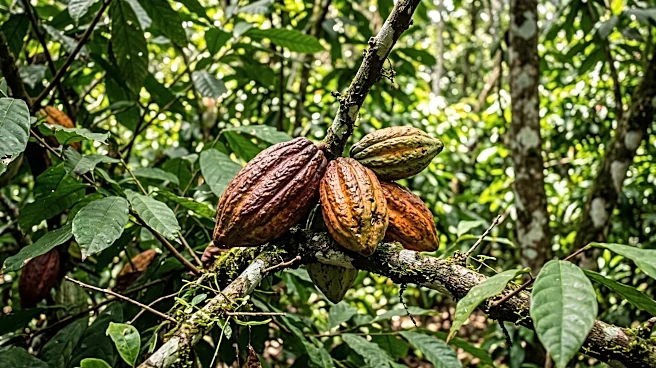
Dr. Bronner's, a U.S. soap brand, has been instrumental in developing and implementing the Regenerative Organic Certified (ROC) standard, particularly within its cocoa supply chains. This initiative, co-founded with Patagonia through the Regenerative Organic Alliance,
focuses on three core pillars: soil health, animal welfare, and social fairness. The brand has successfully applied this standard to cocoa production, leading to the conversion of 2,240 hectares and benefiting 954 farmers in Ghana and Côte d'Ivoire. This commitment extends to their broader 'Purpose Pledge,' which includes ten measurable commitments such as living wages, climate action, and responsible sourcing, with executive pay capped at five times the lowest-paid position. The company's approach emphasizes co-investing with growers and building supply chains where none previously existed, as demonstrated by their organic, fair trade coconut oil supply chain in Sri Lanka.
Why It's Important?
Dr. Bronner's efforts in regenerative branding and supply chain development set a precedent for U.S. companies seeking to integrate sustainability and social responsibility into their core business models. By investing directly in growers and establishing long-term economic frameworks that prioritize mutuality and fair wages, the company addresses critical issues within global agriculture, such as environmental degradation and farmer exploitation. The ROC standard provides a verifiable framework for consumers and stakeholders, enhancing trust in sustainability claims. This model demonstrates that businesses can achieve 'triple profitability'—benefiting ecosystems, people, and their own economics—challenging the traditional view that social and environmental costs are merely 'displaced' onto others. The success in cocoa, a commodity often associated with ethical concerns, highlights the potential for widespread positive impact across various agricultural sectors.
What's Next?
Dr. Bronner's plans to continue expanding the reach of regenerative organic ingredients, as evidenced by their decision to hand over their 'Magic Chocolate' line to a dedicated owner to grow both supply and demand for ROC-certified products. This move aims to widen market access for growers and further integrate regenerative practices into the broader market. The company's 'Purpose Pledge' is designed as a movement to encourage other businesses to adopt similar measurable commitments, fostering a critical mass of companies dedicated to lasting economic change. Future developments may include further integration of non-human life's voice in corporate decisions, building on the precedent set by Patagonia's move to make the Earth its sole shareholder. The ongoing public tracking of their commitments will provide transparency and accountability, potentially influencing industry-wide adoption of regenerative practices.
Beyond the Headlines
The Dr. Bronner's model transcends conventional corporate social responsibility by embedding regenerative principles deeply into its operational and financial structures. The five-to-one executive pay cap, for instance, challenges prevailing corporate compensation norms and underscores a commitment to internal equity. This approach highlights the ethical imperative of businesses to not just minimize harm but actively regenerate ecosystems and uplift communities. The emphasis on 'right relationship' with all stakeholders—employees, suppliers, customers, and communities—redefines the purpose of a corporation beyond mere profit maximization. This holistic view suggests a long-term shift towards an economic system where businesses are judged not only by their financial returns but also by their positive contributions to social and ecological well-being, potentially inspiring a new generation of 'conscious capitalists' in the U.S. and globally.