




What's Happening?
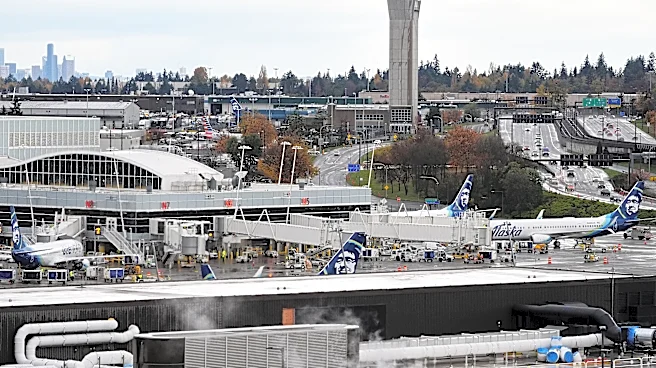
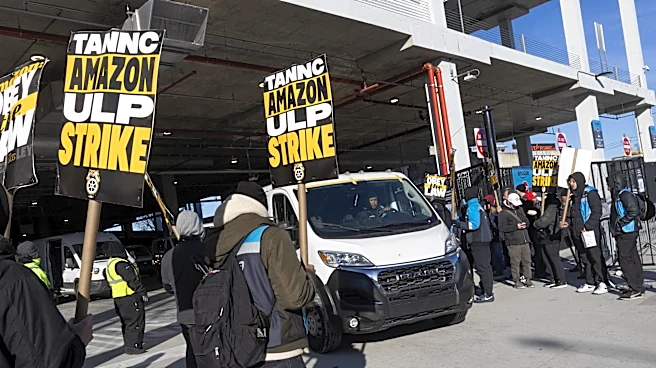
Alaska Airlines workers, represented by IAM Local 2202, are scheduled to picket at the airline's headquarters and Seattle-Tacoma International Airport (SEA) on Monday. The workers are protesting the airline's alleged failure to agree to competitive wages,
job security protections, and safeguards against artificial intelligence (AI) in ongoing contract negotiations. The union, which represents approximately 7,000 customer service, reservations, ramp, stores, and clerical workers at Alaska Airlines, and around 2,000 at Hawaiian Airlines, is negotiating a joint contract following Alaska Airlines' 2024 acquisition of Hawaiian Airlines. Union officials express concern that job security provisions in the current Alaska Airlines contract expire in July 2032, and fear AI could displace jobs without contractual protections. Alaska Airlines acknowledges the picketing as a normal part of negotiations and states it does not anticipate travel disruptions.
Why It's Important?
This planned picket highlights growing labor concerns within the U.S. airline industry, particularly regarding the impact of mergers and technological advancements like AI on worker livelihoods. For U.S. businesses, especially in the service sector, this situation underscores the increasing pressure to address job security and fair compensation in an evolving economic landscape. The union's demand for AI protections reflects a broader societal anxiety about automation and its potential to displace human workers, setting a precedent for future labor negotiations across various industries. The outcome of these negotiations could influence how other companies approach AI integration and worker contracts, potentially shaping future labor policies and corporate responsibilities in the face of technological change. The dispute also affects the integration process of the Alaska-Hawaiian Airlines merger, as a unified workforce contract is crucial for operational harmony.
What's Next?
The informational picketing is scheduled for Monday, with events from 10 a.m. to noon and 2 to 4 p.m. at Alaska Airlines' headquarters and SEA. The union plans to distribute flyers to passengers to raise awareness of their concerns. Alaska Airlines has stated its commitment to reaching an agreement and looks forward to returning to the bargaining table with IAM in early February. The negotiations will continue to focus on competitive wages, job security, and protections against AI. The resolution of these issues will be critical for the combined workforce of Alaska and Hawaiian Airlines and could influence future labor relations within the airline industry as technology continues to advance.
Beyond the Headlines
The dispute between Alaska Airlines and its workers goes beyond immediate wage and benefit demands, touching upon the fundamental shift in the nature of work due to AI. The union's explicit demand for 'AI protections' in their contract signifies a new frontier in labor negotiations, where the threat of automation is as significant as traditional concerns like outsourcing. This development could catalyze similar demands across other U.S. industries facing rapid technological integration. It also raises ethical questions about corporate responsibility in managing technological transitions and ensuring a just future for their workforce. The outcome of these negotiations could serve as a blueprint for how companies and unions navigate the complex intersection of technology, employment, and economic security in the coming decades, potentially influencing public policy debates on AI's societal impact.