






What's Happening?
Volkswagen has reiterated its commitment to its Chattanooga plant despite announcing plans to cut an additional 50,000 positions worldwide by 2030, bringing the total global downsizing to approximately 100,000 jobs. This restructuring, the largest in Volkswagen's
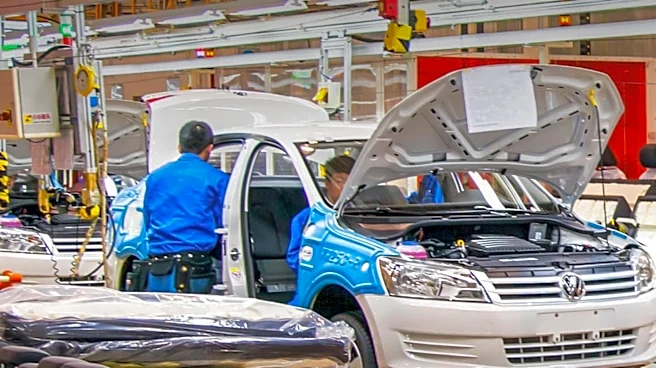
history, was unanimously approved by the company's board. Jeannine Ginivan, chief communications officer for Volkswagen North America, stated that the global plan does not identify specific workforce impacts for locations like Chattanooga and that the company is actively exploring new products for the plant. Volkswagen currently employs around 4,000 people at its Chattanooga facility, which is its only U.S. plant. The restructuring plan, dubbed 'Future Plan 2030,' aims to focus on the most profitable segments in North America and includes cutting 50% of Volkswagen models and finding 'alternative uses' for four plants in Germany, where production will be phased out between 2031 and 2034. Earlier this year, the Chattanooga plant ended production of its electric ID.4 SUV after sales declined following the expiration of federal tax credits, leading to the layoff of fewer than 75 administrative and salaried employees.
Why It's Important?
Volkswagen's reaffirmation of its commitment to the Chattanooga plant is crucial for the local economy and the U.S. automotive manufacturing sector. While the global job cuts signal significant restructuring within the company, the assurance for Chattanooga provides stability for its 4,000 employees and the surrounding community. The focus on North America as a key growth market, driven by its relatively low market share (around 4% of U.S. auto sales), positions the Chattanooga plant as a vital asset for Volkswagen's future strategy. The company's plan to explore new products, potentially including SUVs and pickup trucks, indicates a strategic adaptation to market demands and a desire to capitalize on profitable segments. This commitment helps mitigate concerns that the global downsizing might negatively impact U.S. operations, especially after the earlier layoffs related to ID.4 production. The long-term success of the Chattanooga plant is integral to regional employment, supply chains, and the overall economic health of the area.
What's Next?
Volkswagen's 'Future Plan 2030' will involve a strategic shift towards more profitable segments in North America, with the Chattanooga plant playing a central role. The company will continue to explore new product lines, such as SUVs and pickup trucks, for production at the Chattanooga facility. This will likely entail significant investments in retooling and workforce training to accommodate new vehicle models. Marco Schubert's appointment to oversee strategy for North America, effective October 1, signals a dedicated focus on the region. The global restructuring will continue with the phasing out of production at four German plants between 2031 and 2034 and the reduction of 50% of Volkswagen models. The Chattanooga plant's future will depend on its ability to adapt to these strategic changes and successfully integrate new product offerings into its manufacturing operations, aligning with Volkswagen's goal of sustainable profitability in the North American market.
Beyond the Headlines
Volkswagen's global restructuring and its specific commitment to Chattanooga highlight broader trends in the automotive industry, particularly the challenges posed by shifting market demands, increased competition from Chinese automakers, and the evolving landscape of electric vehicle incentives. The decision to cut 50% of models and focus on profitable segments reflects a strategic pivot towards efficiency and market responsiveness. For the U.S. market, this could mean a greater emphasis on vehicles tailored to American consumer preferences, such as larger SUVs and pickup trucks. The earlier cessation of ID.4 production in Chattanooga due to expiring federal tax credits underscores the significant impact of government policies on EV adoption and manufacturing. This situation also illustrates the delicate balance between global corporate strategy and local economic stability, as major decisions made at the corporate level can have profound effects on specific communities and their workforces. The long-term success of the Chattanooga plant will serve as a case study for how traditional automakers navigate these complex global and local dynamics.