




What's Happening?
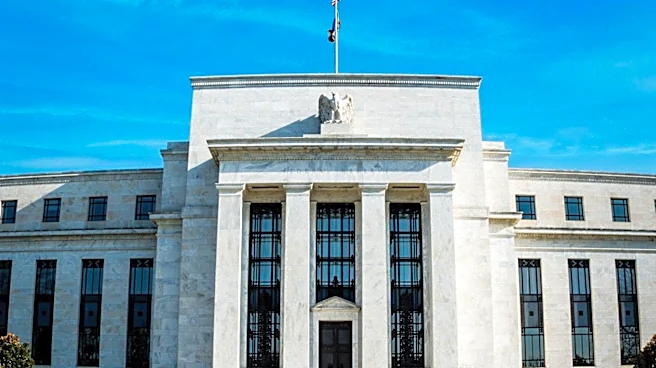
Traders have significantly increased their positions in futures tied to the Federal Reserve's benchmark interest rate, reaching an all-time high. This surge comes as the market braces for the possibility that the Federal Reserve might raise interest rates
in its upcoming decision. The open interest in federal funds futures, which will settle after the decision, surpassed the previous record set by October 2024 contracts. As of Monday, the total open interest reached 967,136 contracts, according to CME Group Inc. This trading activity highlights the uncertainty surrounding the Fed's next move, with traders factoring in a roughly one-third chance of a quarter-percentage-point hike. The uncertainty is fueled by mixed economic signals and a shift in leadership at the Fed, where Chairman Kevin Warsh has emphasized the need to control inflation, which has been above the 2% target since early 2021.
Why It's Important?
The heightened activity in Fed futures reflects a significant divide in market expectations regarding the Federal Reserve's monetary policy. The potential for an interest rate hike or a decision to hold steady has broad implications for the U.S. economy, affecting borrowing costs for businesses and consumers. A rate hike could signal the Fed's commitment to controlling inflation, which has been a persistent issue. However, it could also slow economic growth by increasing the cost of borrowing. The uncertainty in the market underscores the challenges faced by the Fed in balancing inflation control with economic growth, especially amid recent easing of inflation pressures and slowing job growth. The outcome of the Fed's decision will be closely watched by investors, businesses, and policymakers, as it will influence economic strategies and financial markets.
What's Next?
The Federal Reserve's decision, expected at 2 p.m. Washington time on Wednesday, will be pivotal. If the Fed decides to raise rates, it could lead to adjustments in financial markets and influence future economic policies. Conversely, if the Fed holds rates steady, it may indicate a cautious approach in response to recent economic data. The decision will likely prompt reactions from various stakeholders, including financial institutions, businesses, and government officials, who will need to adapt their strategies based on the Fed's direction. The market will continue to monitor economic indicators and Fed communications for clues about future policy moves.