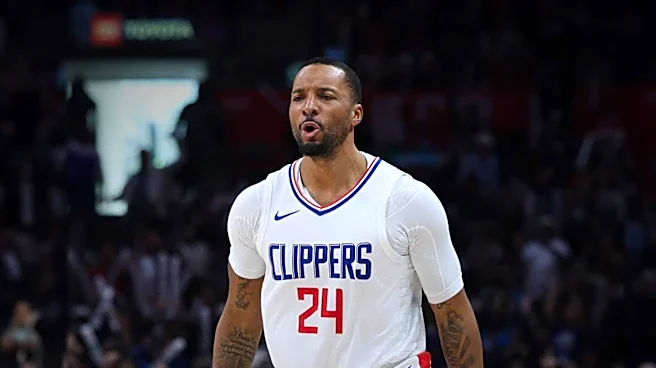




What's Happening?
ESPN and the NBA are in a public dispute following an ESPN report regarding the ongoing investigation into Kawhi Leonard and the Los Angeles Clippers. ESPN claimed, citing multiple sources, that the NBA found no definitive evidence that Clippers owner
Steve Ballmer directly funneled money through team sponsors to pay Leonard and circumvent the salary cap. However, the NBA swiftly issued a statement refuting ESPN's report, calling it inaccurate and emphasizing that the investigation is still ongoing. The NBA's Chief Communications Officer, Mike Bass, stated that ESPN's article contained 'numerous and significant inaccuracies' and that the league refused to cooperate with ESPN on the story. Despite the NBA's denial, ESPN is standing by its reporting. This disagreement has further complicated the situation, as the trade involving Kawhi Leonard remains blocked, with the Raptors refusing to finalize it until the investigation is concluded, potentially seeking disciplinary consequences.
Why It's Important?
This public disagreement between the NBA and ESPN carries significant implications for both organizations and the broader sports media landscape. For the NBA, the integrity of its investigations and its ability to enforce salary cap rules are paramount. A perceived lack of transparency or a premature leak of information, especially if inaccurate, could undermine public trust in the league's governance. For ESPN, a major sports media outlet, maintaining journalistic credibility is crucial. Being publicly contradicted by the league it covers extensively could damage its reputation, particularly if the NBA's claims of inaccuracies are substantiated. The ongoing blockage of the Kawhi Leonard trade also highlights the potential for such investigations to disrupt team operations and player movements, impacting competitive balance and financial planning for franchises. This situation underscores the delicate balance between sports leagues, their media partners, and the public's right to information, especially when allegations of rule violations are involved.
What's Next?
The NBA's investigation into Kawhi Leonard and the Los Angeles Clippers is expected to continue, with the league promising to make its findings public once concluded. The immediate next step will likely involve further internal review by the NBA to finalize its investigation and determine if any violations occurred, particularly regarding the Clippers' potential role in connecting Leonard with commercial partners. The Raptors will continue to monitor the situation closely, as the outcome of the investigation directly impacts the finalization of the trade and any potential disciplinary actions that could benefit them. ESPN, having stood by its report, may continue to pursue additional information or clarifications to support its claims. The public and media will be awaiting the NBA's official announcement, which could lead to penalties for the Clippers, a resolution for the trade, and potentially further scrutiny of the relationship between sports leagues and their media partners.
Beyond the Headlines
The clash between the NBA and ESPN over the Kawhi Leonard investigation reveals deeper issues concerning transparency, media ethics, and the power dynamics within professional sports. The NBA's strong denial without specifying the inaccuracies raises questions about the league's communication strategy and its control over information, especially in sensitive matters. Conversely, ESPN's decision to publish without full cooperation from the NBA highlights the tension between journalistic independence and access to official sources. This incident could set a precedent for how sports leagues and media outlets interact during ongoing investigations, potentially leading to more guarded communication from leagues or more aggressive reporting from media. Furthermore, the underlying issue of potential salary cap circumvention through sponsorship deals points to a persistent challenge in professional sports, where teams and players may seek creative ways to gain competitive advantages, prompting leagues to continuously adapt their enforcement mechanisms and rules to maintain fair play and financial integrity.