






What's Happening?
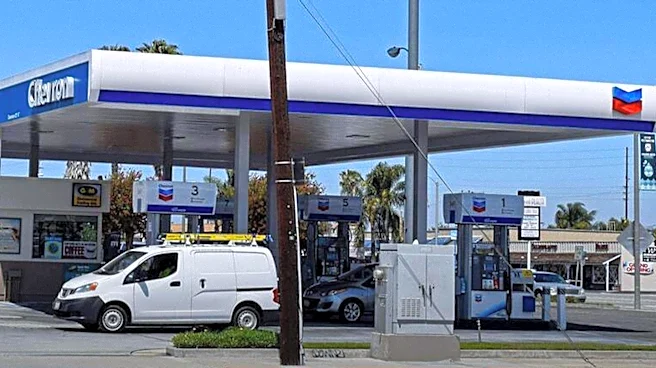
Chevron Corporation (NYSE:CVX), a major integrated energy company, saw its stock retreat by 1.86% in the most recent trading session, closing at USD 212.93. This decline occurred on a volume of 10.46 million shares, which is modestly above its average.
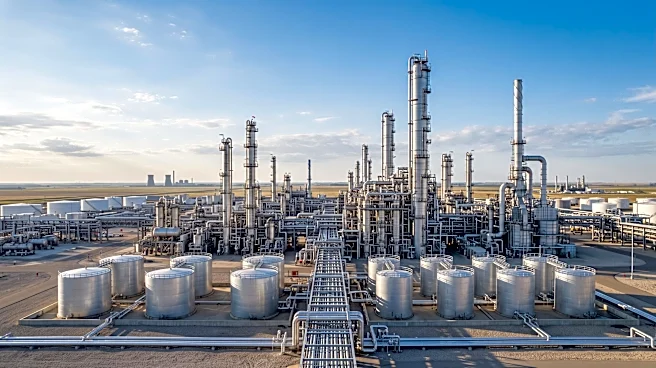
The company's operations span exploration, production, refining, and petrochemicals across North America, Australia, Kazakhstan, and other international basins, with significant exposure to crude oil and natural gas. The session's downturn reflects a broader negative sentiment and technical pressure affecting the energy minerals sector. Despite this, Chevron's trailing twelve-month Earnings Per Share (EPS) of USD 13.67 indicates a substantial 93.02% growth from a previous low base, showcasing the company's profitability improvement during the energy upcycle. The stock's price-to-earnings (P/E) ratio stands at 15.57, and it offers a dividend yield of 3.25%.
Why It's Important?
The recent decline in Chevron's stock, alongside the broader energy sector's pressure, highlights the inherent volatility and cyclical nature of the oil and gas industry. For U.S. investors, particularly those focused on income, Chevron's 3.25% dividend yield remains a significant attraction, positioning it as a key holding for value and income. However, the consistent downside signals from technical indicators suggest that near-term selling pressure is broad-based, which could impact investor confidence and portfolio performance. The company's earnings are directly tied to global crude oil and natural gas prices, meaning sustained declines in commodity prices could challenge its profitability and ability to maintain dividend growth. This situation underscores the importance of monitoring global energy markets and geopolitical stability for investors with exposure to the energy sector.
What's Next?
The immediate future for Chevron's stock will likely be influenced by the ongoing technical and sentiment pressures within the energy minerals sector. Investors will be closely watching for any shifts in commodity prices, as these directly impact Chevron's upstream earnings. The company's ability to navigate geopolitical disruptions in its international operating regions will also be a critical factor. While the current technical indicators suggest continued near-term pressure, the company's fundamental profile, including its strong dividend yield and recovery in EPS, may provide a floor for long-term income-oriented investors. Future earnings reports and any strategic announcements regarding its lower carbon portfolio will be key in determining the stock's trajectory and investor sentiment.
Beyond the Headlines
The performance of major energy companies like Chevron extends beyond mere stock prices, reflecting deeper implications for the U.S. economy and global energy transition. The cyclical nature of energy earnings, as highlighted by Chevron's P/E ratio, points to the ongoing challenge of balancing fossil fuel production with increasing demands for cleaner energy. The company's exposure to geopolitical risks in international basins underscores the complex interplay between energy security, foreign policy, and global supply chains. Furthermore, the 'energy transition risk' mentioned in the analysis suggests a long-term shift in demand assumptions for hydrocarbons, which could necessitate significant strategic adjustments for Chevron and the broader industry. This ongoing evolution will shape future investment, employment, and environmental policies in the U.S. and globally.