


What's Happening?
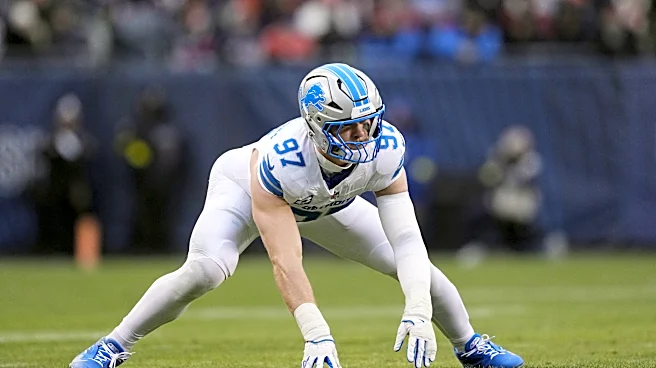
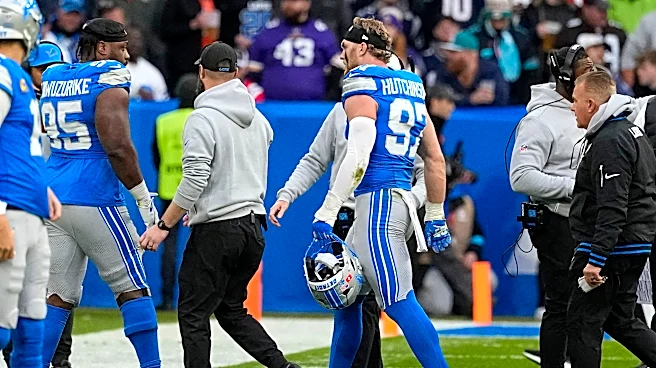
Detroit Lions star edge rusher Aidan Hutchinson suffered a season-ending torn ACL in Week 10, a significant blow to the team's current season. However, his contract, a four-year, $180 million extension signed in 2025, includes a clause allowing the Lions to purchase
insurance policies against his salary. If the Lions did purchase such policies, they could receive salary cap credits in 2027. The contract reportedly permits the Lions to insure up to $60 million in lost salary due to injury, with up to $45 million for the current season, covering parts of his signing bonus, option bonus, and base salary. While Hutchinson's salary still counts towards the 2026 cap, any insurance payouts could lead to future cap relief. The Lions have a history of insuring large contracts, such as Matthew Stafford's in 2017, but notably did not insure Jared Goff's recent extension.
Why It's Important?
The potential salary cap credit in 2027 resulting from Aidan Hutchinson's injury could provide the Detroit Lions with crucial financial flexibility. With several key players, including tight end Sam LaPorta and safety Brian Branch, set to become free agents at the end of the current season, maximizing cap space in 2027 would enable the Lions to re-sign these players to larger contracts and maintain a competitive roster. This financial maneuverability is vital for long-term team building and sustaining success in the NFL's salary-cap era. The decision to insure certain player contracts highlights a strategic approach to risk management in professional sports, balancing the immediate financial outlay for insurance premiums against the potential future benefits of cap relief in the event of a significant injury to a high-value player.
What's Next?
The immediate impact of Aidan Hutchinson's injury is his absence for the remainder of the current season, forcing the Detroit Lions to adjust their defensive strategies. In the longer term, the financial implications will become clearer in 2027. The Lions will determine if they had insurance policies in place for Hutchinson's contract and, if so, the extent of the payouts and subsequent salary cap credits they will receive. This potential cap relief will then influence their approach to player retention and free agency decisions for the 2027 season, particularly concerning key players whose contracts are expiring. The team's management will need to strategically utilize any newfound cap space to strengthen the roster and continue their pursuit of a championship.
Beyond the Headlines
Aidan Hutchinson's injury and the subsequent discussion of salary cap insurance policies reveal a sophisticated layer of financial management within professional sports. This practice underscores the significant investments teams make in their star athletes and the measures taken to mitigate financial risk associated with career-altering injuries. The selective nature of these insurance policies—insuring some high-value contracts but not others, like Jared Goff's—suggests a complex risk assessment process based on various factors, including player position, injury history, and contract structure. This financial strategy is a critical, often unseen, component of team sustainability and competitiveness, influencing not only immediate roster decisions but also long-term organizational planning and financial health in the highly competitive NFL landscape.