




What's Happening?
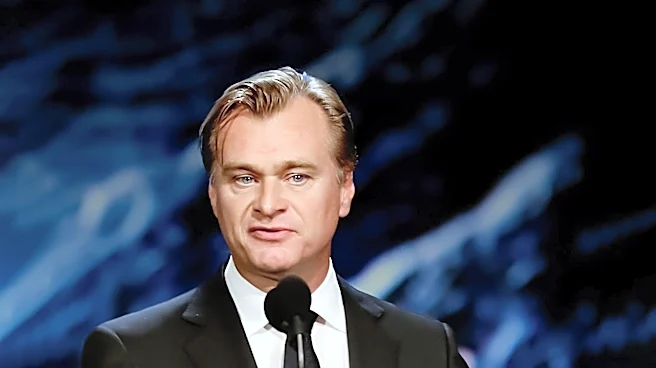
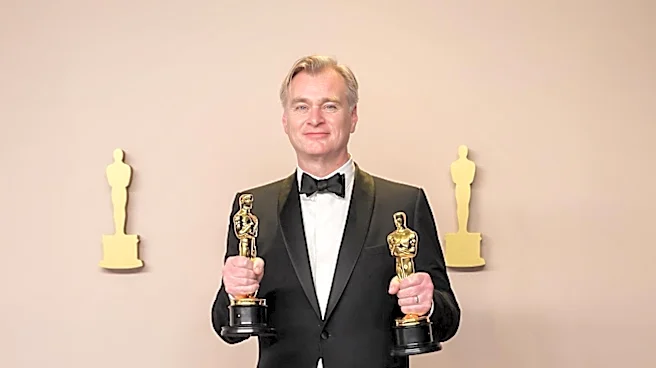
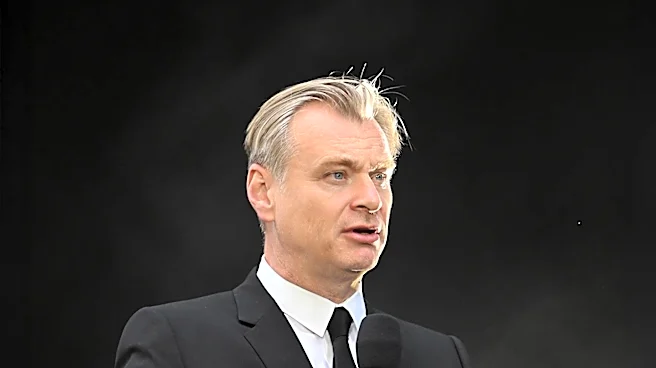
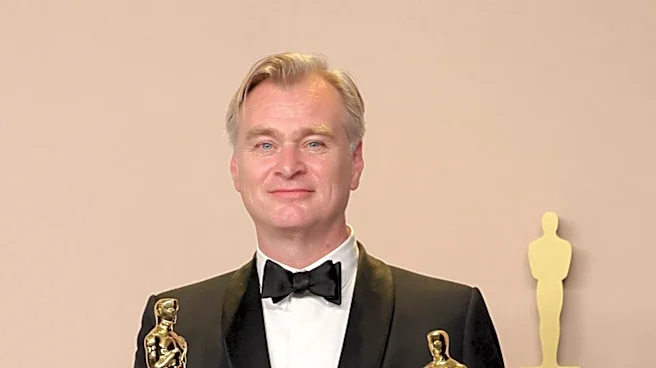
Christopher Nolan, renowned director of films such as The Dark Knight trilogy and Oppenheimer, has expressed his views on the rejection of artificial intelligence (AI) in filmmaking by younger audiences. In an interview, Nolan discussed the 'immediate
and harsh' judgment of AI-generated content, which he refers to as 'AI slop.' He noted that younger viewers are increasingly disinterested in virtual environments, preferring more tactile and real forms of storytelling. Nolan's upcoming film, The Odyssey, set to premiere on July 17, 2026, exemplifies this trend by featuring practical effects, including a 60-foot Cyclops puppet. The film was shot in Psychro Cave, believed to be the birthplace of Zeus. Nolan's comments come amid a broader industry debate on the role of AI in filmmaking, with other directors like James Cameron and Seth Rogen also expressing concerns.
Why It's Important?
Nolan's critique of AI in filmmaking underscores a significant cultural shift among younger audiences who are gravitating towards more authentic storytelling methods. This trend could influence the future of the film industry, potentially leading to a resurgence of practical effects and traditional filmmaking techniques. The rejection of AI by younger viewers, who are typically more tech-savvy, suggests a pushback against the over-reliance on digital technology in creative fields. This could impact how studios allocate resources, possibly reducing investments in AI-driven projects in favor of more conventional methods. The broader implications extend to the entertainment industry as a whole, where the balance between technological innovation and artistic authenticity continues to be a contentious issue.
What's Next?
As The Odyssey approaches its release, its reception could serve as a barometer for the industry's direction regarding AI and practical effects. If successful, it may encourage other filmmakers to prioritize tangible storytelling techniques over digital enhancements. Studios might also reconsider their strategies, potentially leading to a shift in how films are produced and marketed. The ongoing debate about AI's role in creative industries is likely to continue, with stakeholders from various sectors weighing in on the potential benefits and drawbacks. The outcome could influence not only filmmaking but also other areas of entertainment and media where AI is increasingly being integrated.