



What's Happening?
Alex Harstrick, co-founder and managing partner of J2 Ventures, recently appeared on 'Squawk Box' to provide insights into the current landscape of Chinese Initial Public Offerings (IPOs) and the ongoing technological competition between the United States
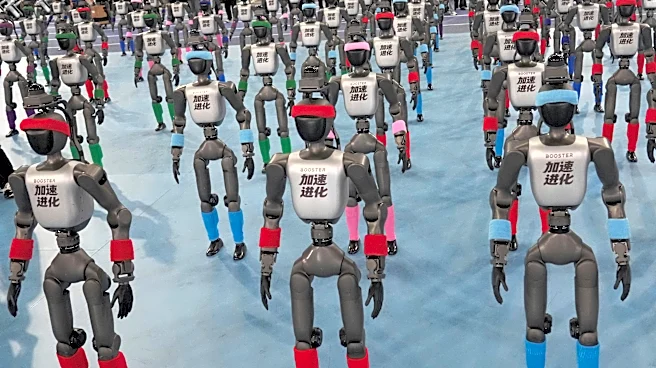
and China, particularly in the field of Artificial Intelligence (AI). His discussion included an analysis of Unitree's IPO debut and the broader trends influencing the pricing of Chinese IPOs. Harstrick's commentary sheds light on the economic and strategic implications of these developments, emphasizing the dynamic nature of the U.S.-China tech race. The conversation covered various aspects of the tech sector, including cybersecurity and enterprise AI, highlighting the critical areas of innovation and competition.
Why It's Important?
The discussion by Alex Harstrick is important because it addresses the intricate relationship between U.S. and Chinese technological advancements and market dynamics. The pricing of Chinese IPOs directly impacts global investment strategies and the flow of capital, affecting U.S. investors and financial markets. Furthermore, the state of the U.S.-China AI tech race has profound implications for national security, economic competitiveness, and future technological leadership. The insights from a venture capital perspective, such as J2 Ventures, are crucial for understanding where innovation is being directed and how geopolitical tensions are shaping the tech industry. This competition influences everything from supply chains to intellectual property rights, making it a central issue for policymakers and business leaders in the U.S.
What's Next?
Looking ahead, the trends discussed by Alex Harstrick suggest continued scrutiny and potential shifts in investment strategies concerning Chinese IPOs. The U.S.-China AI tech race is expected to intensify, with both nations likely to increase investments in research and development, as well as implement policies aimed at fostering domestic innovation and protecting technological advantages. Businesses and investors will need to closely monitor regulatory changes, trade policies, and geopolitical developments that could impact market access and technological collaboration. The performance of companies like Unitree in the public market will serve as indicators of investor confidence and the overall health of the Chinese tech sector, influencing future IPO decisions and cross-border investments.
Beyond the Headlines
Beyond the immediate financial and technological implications, the U.S.-China AI tech race, as highlighted by Alex Harstrick, touches upon deeper ethical and societal considerations. The rapid advancement of AI technologies raises questions about data privacy, algorithmic bias, and the future of work. The competition also underscores the broader ideological struggle between different economic and political systems, with each nation vying for global influence through technological dominance. The ethical frameworks and regulatory approaches adopted by the U.S. and China in AI development will have long-term consequences for global standards and human rights. This technological rivalry is not just about economic gain but also about shaping the future of governance and societal values on a global scale.