







What's Happening?
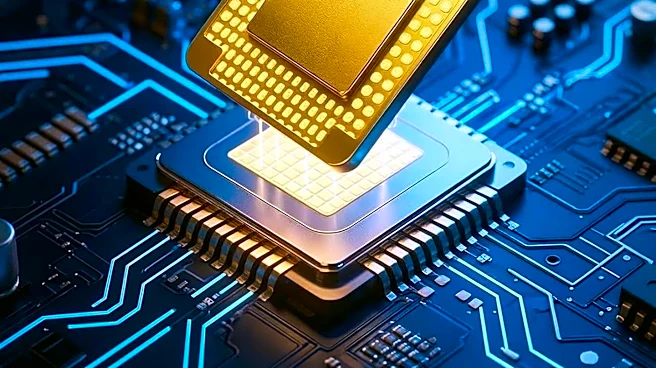
Microchip Technology Inc. has expanded its industrial edge networking solution stack by integrating EtherCAT and Time-Sensitive Networking (TSN) capabilities into its PolarFire Field-Programmable Gate Arrays (FPGAs) and System-on-Chips (SoCs). This enhancement
aims to address the growing demands of industrial systems that are evolving to support AI-enabled automation, robotics, and intelligent edge computing. The new features provide developers with deterministic, real-time networking solutions while focusing on minimizing power consumption, maintaining security, and reducing system complexity. Beckhoff Automation GmbH EtherCAT IP is now compatible with both PolarFire FPGA and SoC devices, and Microchip's TSN IP is supported on PolarFire FPGA SoCs. These additions are part of Microchip's broader strategy to offer comprehensive FPGA solution stacks that combine hardware, IP, development tools, and reference designs to accelerate development in various applications, including industrial networking, AI, machine learning, and security-focused systems. According to Shakeel Peera, vice president of Microchip’s FPGA business unit, this move provides developers with the necessary deterministic networking technologies for building highly responsive and scalable industrial and embedded networking applications.
Why It's Important?
This development is significant for U.S. industries involved in advanced manufacturing, industrial automation, and robotics. The integration of EtherCAT and TSN into Microchip's power-efficient PolarFire platform enables the creation of more intelligent, distributed, and data-driven industrial networks. These technologies are crucial for achieving predictable communication performance and interoperability across connected devices, which are essential for the precise control and coordination required in modern industrial environments. The focus on power efficiency, security, and reduced complexity can lead to lower operational costs and faster deployment of advanced industrial solutions. Companies developing motion control systems, industrial robotics, embedded vision, factory automation, and autonomous mobile robots stand to benefit from these enhanced capabilities, allowing them to build more reliable and energy-efficient real-time processing systems. This also supports the broader Industry 4.0 initiative by providing the foundational networking infrastructure for smart factories and interconnected industrial processes.
What's Next?
The expansion of Microchip's industrial edge networking stack is expected to accelerate the development and deployment of next-generation industrial applications. Developers will likely leverage these new capabilities to design more sophisticated AI-enabled automation and robotics systems. Microchip will continue to support these solutions with its Libero SoC design suite, IP cores, and reference designs, including the PolarFire SoC Motor Control Kit, to facilitate rapid evaluation and prototyping. This move could also spur further innovation in the industrial semiconductor market as other manufacturers respond to the enhanced offerings. The increased adoption of EtherCAT and TSN in industrial settings, driven by solutions like Microchip's, will likely lead to more standardized and interoperable industrial communication protocols, fostering greater integration across different manufacturing and automation platforms. Future developments may include further optimizations for AI at the edge and enhanced security features to protect critical industrial infrastructure.
Beyond the Headlines
Beyond the immediate technical benefits, Microchip's enhancement of its PolarFire FPGAs reflects a broader trend towards decentralization and intelligence at the edge of industrial networks. As AI and machine learning capabilities move closer to the data source, the demand for robust, real-time, and secure edge computing solutions intensifies. This development underscores the critical role of FPGAs in providing the flexibility and performance needed to adapt to rapidly evolving industrial requirements, unlike more rigid ASIC solutions. The emphasis on security with features like secure boot and anti-tamper protection highlights the growing concern over cybersecurity in industrial control systems, which are increasingly vulnerable to sophisticated threats. This strategic move by Microchip also positions it as a key enabler for the digital transformation of manufacturing, potentially influencing long-term shifts in how industrial operations are designed, managed, and secured, ultimately contributing to increased efficiency and resilience in U.S. industrial sectors.