



What's Happening?
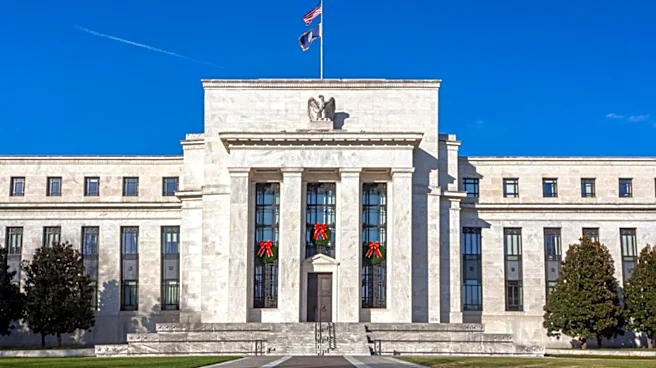
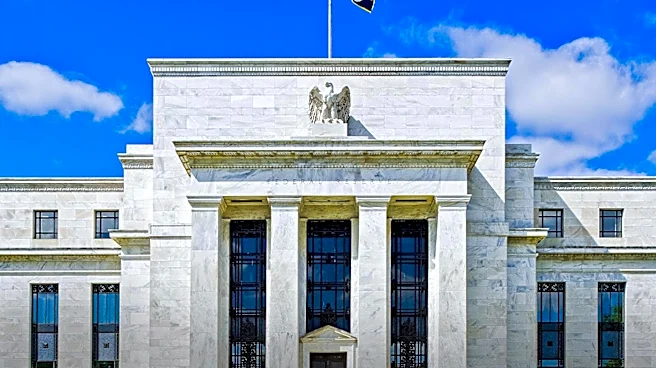
Federal Reserve Bank of Philadelphia President Anna Paulson has indicated her openness to considering consecutive interest-rate increases at upcoming policy meetings to combat inflation. While emphasizing a measured approach, Paulson stated that the direction
for interest rates is clearly higher. The Federal Reserve previously raised its benchmark rate by a quarter percentage point in September to a range of 3.75% to 4% and maintained that level last month. Minutes from the October meeting revealed that nearly all policymakers believe further tightening will be necessary in the coming months. Paulson's stance aligns with other Fed officials, including Governor Christopher Waller, who suggested considering a half-point increase in December, and Cleveland Fed President Beth Hammack, who advocates for small but successive rate increases. Paulson is monitoring for signs of accelerating inflation pressures or increased risks from supply and demand imbalances in the economy.
Why It's Important?
The potential for consecutive interest rate hikes by the Federal Reserve carries significant implications for the U.S. economy. Higher interest rates directly impact borrowing costs for consumers and businesses, affecting mortgages, car loans, and credit card rates. This could lead to a slowdown in economic activity as borrowing becomes more expensive, potentially curbing consumer spending and business investment. For industries reliant on consumer credit or large capital expenditures, such as real estate, automotive, and manufacturing, this could translate into reduced demand and slower growth. Conversely, savers may benefit from higher returns on their deposits. The Fed's deliberate approach, as advocated by Paulson, aims to allow households, businesses, and banks time to adjust to these changes, mitigating abrupt shocks to the financial system. However, the ongoing debate among Fed officials regarding the pace and magnitude of rate increases highlights the delicate balance between controlling inflation and avoiding an economic downturn.
What's Next?
The Federal Open Market Committee (FOMC) is scheduled to hold its next meeting on December 8-9, where another rate increase is widely anticipated. Traders, according to CME Group's FedWatch tool, are currently betting on a 91.8% chance of a quarter-point rate hike in December. The January 2027 meeting is also a point of focus, with prediction markets showing a near 50/50 split between a quarter-point increase and no change. The decisions made at these upcoming meetings will be heavily influenced by incoming inflation data and other economic indicators. The Fed's strategy will continue to aim for a 'measured pace' to allow for flexibility in response to evolving economic conditions. The market will closely watch for any shifts in rhetoric from Fed officials and the outcomes of these meetings to gauge the future trajectory of interest rates and their impact on the U.S. economy.
Beyond the Headlines
The Federal Reserve's ongoing efforts to combat inflation through interest rate adjustments underscore a broader challenge in modern monetary policy: balancing economic stability with growth. The emphasis on a 'deliberate way' reflects a cautious approach to avoid over-tightening, which could trigger a recession, while still addressing persistent inflationary pressures. This situation highlights the inherent tension between the Fed's dual mandate of maximizing employment and maintaining price stability. The differing opinions among Fed officials, such as Governor Waller's suggestion for a larger hike versus Paulson's preference for a measured pace, illustrate the complexity of economic forecasting and policy implementation in a dynamic environment. The impact extends beyond immediate financial markets, influencing long-term investment decisions, consumer confidence, and the overall economic landscape, as businesses and individuals adapt to a potentially prolonged period of higher borrowing costs.