





What's Happening?
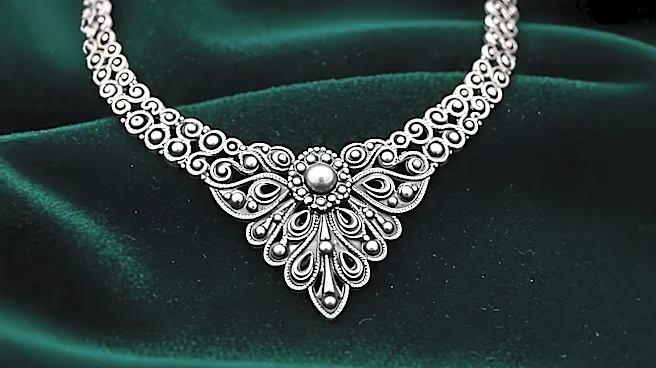
Art Nouveau, a decorative arts movement that flourished across Europe and America from the 1890s into the early 1900s, brought an organic and sculptural sensibility to jewelry design. This style marked a departure from the heavier historicism of the Victorian
era, embracing fluid lines, floral forms, and asymmetrical compositions. In the context of 'toi et moi' rings, which feature two principal gemstones symbolizing two lives joined, Art Nouveau designs allowed the stones to be integrated into stem-like settings, framed by sensual portraits, or nestled within sinuous, vine-like lines. This artistic movement emphasized nature-inspired motifs and a sense of movement, contrasting sharply with the more structured and geometric designs that would characterize the later Art Deco period.
Why It's Important?
The Art Nouveau movement in jewelry design is important because it represented a significant artistic and cultural shift, moving away from the rigid conventions of the past towards a more expressive and natural aesthetic. This period influenced not only jewelry but also architecture, graphic arts, and interior design, reflecting a broader societal desire for modernity and a rejection of industrial mass production in favor of handcrafted artistry. For the U.S., the adoption of Art Nouveau styles indicated a connection to European artistic trends and contributed to the diversification of American design. The emphasis on unique, handcrafted pieces also fostered a market for skilled artisans and designers, promoting creativity and individuality in consumer goods. This era laid foundational groundwork for subsequent design movements by challenging traditional norms and expanding the possibilities of artistic expression.
What's Next?
While Art Nouveau as a dominant style has passed, its influence continues to be seen in contemporary jewelry and design. Modern designers often draw inspiration from its organic forms and emphasis on craftsmanship. Collectors and enthusiasts continue to seek out authentic Art Nouveau pieces, recognizing their historical and artistic value. The principles of integrating natural elements and fluid lines remain relevant in various artistic fields. The ongoing appreciation for Art Nouveau ensures that its unique aesthetic continues to be studied, preserved, and reinterpreted, contributing to the rich tapestry of design history and inspiring new generations of artists and jewelers.
Beyond the Headlines
Beyond its aesthetic appeal, Art Nouveau jewelry often carries deeper cultural and philosophical implications. The movement emerged during a period of rapid industrialization, and its embrace of nature and handcrafted elements can be seen as a reaction against the perceived dehumanizing effects of mass production. It celebrated the beauty of the natural world and the female form, often incorporating symbolic imagery that reflected contemporary spiritual and psychological interests. The fluidity and interconnectedness of its designs can also be interpreted as a metaphor for the interconnectedness of life and the organic flow of existence. This makes Art Nouveau not just a style, but a reflection of a particular moment in history when society grappled with modernity, seeking beauty and meaning in an increasingly industrialized world.