
What's Happening?
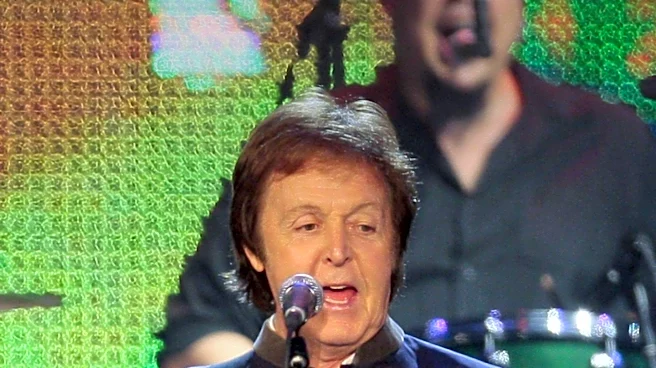
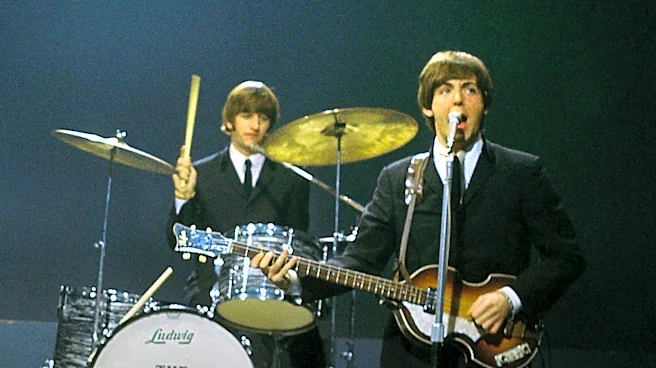
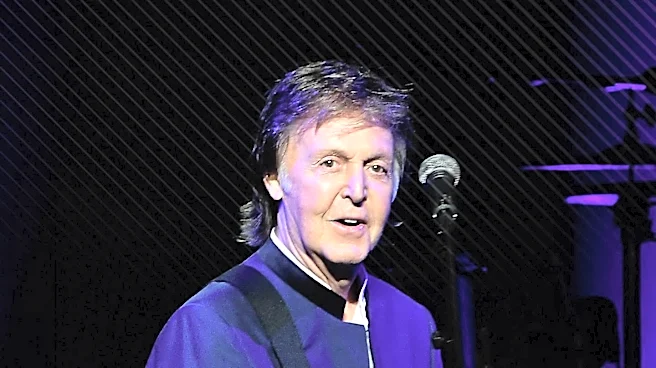
American Songwriter has outlined a hypothetical 'dream rock supergroup' built around Paul McCartney, excluding other members of The Beatles. The proposed lineup places McCartney on lead vocals and bass
guitar. For lead guitar, Eric Clapton is suggested, despite his past involvement in a love triangle with George Harrison and Pattie Boyd, due to his bluesy rock style. David Crosby is chosen for backing vocals, recognized for his harmony work with Crosby, Stills, Nash & Young. Mick Fleetwood is selected for drums, with the rationale that his Fleetwood Mac folk-rock background would offer McCartney a new experimental avenue. Finally, Rick Wakeman is proposed for keyboards, lauded for his solo work, session musician experience with artists like David Bowie and Elton John, and his versatility.
Why It's Important?
This speculative supergroup concept is important for several reasons within the music industry and for fans. It highlights the enduring influence and versatility of Paul McCartney, demonstrating how his musicality could theoretically blend with diverse rock legends. Such discussions foster engagement among music enthusiasts, sparking debates and imaginative scenarios about potential collaborations that transcend historical band formations. It also underscores the individual talents of the selected musicians—Clapton, Crosby, Fleetwood, and Wakeman—by recognizing their unique contributions and imagining how their styles could complement McCartney's. This type of creative exercise can also influence contemporary artists by showcasing how different musical elements can be combined to create innovative sounds, encouraging cross-genre experimentation.
What's Next?
While this supergroup remains a hypothetical exercise, the article's premise could inspire similar discussions and 'what if' scenarios among music critics and fans, potentially leading to fan-created music or tribute projects exploring these imagined collaborations. The article serves as a testament to the lasting impact of these musicians, ensuring their work continues to be analyzed and appreciated in new contexts. It might also prompt individual artists to consider unexpected collaborations, drawing inspiration from the idea of blending distinct musical legacies. The ongoing conversation around such dream lineups reinforces the cultural significance of these rock icons and their continued presence in the collective musical consciousness.
Beyond the Headlines
Beyond the immediate fantasy of a supergroup, this article touches upon the broader theme of artistic legacy and the hypothetical evolution of musical styles. By intentionally excluding other Beatles members, it forces a re-evaluation of McCartney's individual contributions and how his artistry might have developed in different contexts. The selection of musicians like Eric Clapton, despite personal history, subtly explores the idea that artistic compatibility can sometimes transcend personal conflicts, focusing purely on musical synergy. Furthermore, the inclusion of diverse talents like David Crosby, Mick Fleetwood, and Rick Wakeman suggests a rich tapestry of rock history, where different sub-genres and eras could theoretically converge. This imaginative exercise ultimately celebrates the depth and breadth of rock music's talent pool and its potential for endless reinvention.