







What's Happening?
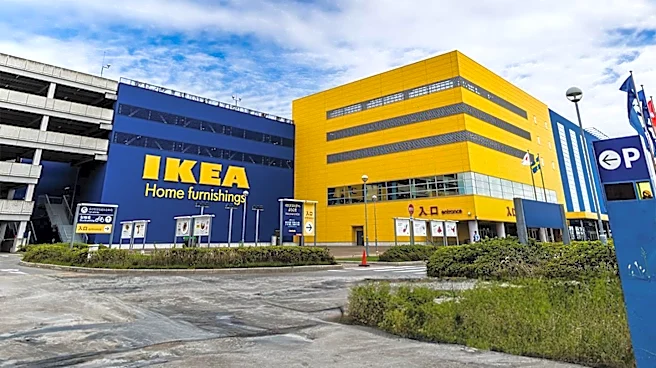
IKEA is implementing a strategic shift towards smaller urban outlets and city center locations to counteract a decline in sales. This move includes the planned opening of a key urban store in Manhattan early next year. The change in strategy, led by new
CEO Juvencio Maeztu, aims to attract more shoppers and return the Swedish furniture retailer to growth. The company's sales for its 2026 financial year, ending August 31, were €38.8 billion ($42.7 billion), a decrease from €39 billion the previous year, marking the third consecutive year of declines. This pivot is a response to evolving shopping habits since the COVID-19 pandemic and the rising cost of petrol, which have reduced the likelihood of families visiting IKEA's traditional large suburban warehouse stores. While online visits increased to 4.2 billion in 2026, physical store visits slightly fell to 729 million from 739 million.
Why It's Important?
This strategic shift by IKEA reflects a broader trend in the retail industry, where traditional large-format stores are struggling to adapt to changing consumer behaviors. The move to urban centers and smaller formats indicates a recognition that convenience and accessibility are becoming paramount for shoppers, especially in densely populated areas. For the U.S. retail landscape, this could signify a continued transformation of urban commercial spaces, with more retailers opting for smaller footprints to integrate into city life. The decline in sales for IKEA, despite increased online engagement, highlights the challenges even established brands face in maintaining physical store traffic. This could lead other large retailers to re-evaluate their own brick-and-mortar strategies, potentially resulting in more localized and experience-driven retail environments. The focus on affordability, with €1.2 billion in price cuts across Europe, also underscores the impact of inflation and rising living costs on consumer spending, a factor relevant to the U.S. market.
What's Next?
IKEA's new Manhattan store is set to open early next year, serving as a key test for its urban strategy in the U.S. market. The company plans to continue adding smaller formats for convenience, even in cities where larger IKEA stores already exist. Furthermore, IKEA will integrate more external retailers into its out-of-town stores, following the example of Decathlon opening in its Croydon store, to boost footfall. CEO Juvencio Maeztu emphasized that the 'big blue box' will remain the backbone of their operations, but these smaller formats are crucial for expanding reach. The company has also undertaken cost-cutting measures, including at least 1,000 job reductions since the beginning of the year. The success of these initiatives will likely influence future investment and expansion decisions in the U.S. and globally, as IKEA aims to reverse its sales decline and adapt to the evolving retail environment.
Beyond the Headlines
IKEA's strategic pivot extends beyond mere store format changes; it represents a fundamental re-evaluation of its business model in response to significant societal and economic shifts. The acknowledgment that 60% of a single person's income in Europe goes to housing, and 40% for couples, highlights the profound impact of living costs on consumer purchasing power. This economic pressure necessitates a focus on affordability, which could lead to broader implications for product design, supply chain efficiency, and pricing strategies across the retail sector. The integration of other retailers into IKEA's larger stores also suggests a move towards more collaborative and multi-purpose retail spaces, potentially blurring the lines between different retail categories. This could foster new partnerships and innovative retail experiences, challenging traditional notions of standalone stores and creating more dynamic commercial hubs. The ethical implications of job cuts amidst a strategic overhaul will also be a point of scrutiny for stakeholders.