





What's Happening?
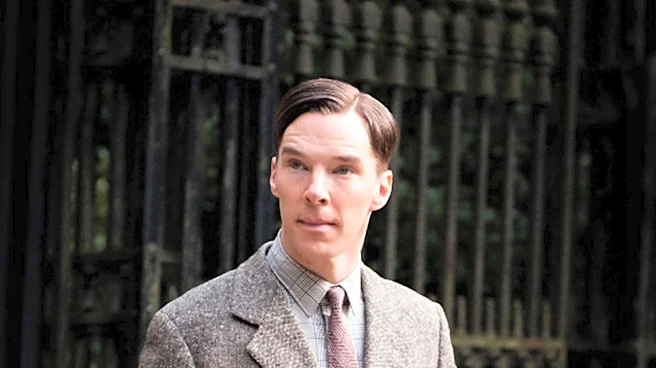
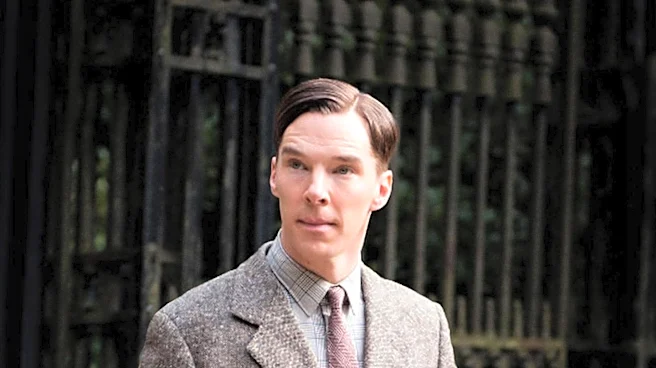
Benedict Cumberbatch stars in the 2021 film 'The Electrical Life of Louis Wain,' which chronicles the life of Victorian illustrator Louis Wain. Wain was renowned for his anthropomorphic cat illustrations, often depicting cats engaged in human-like activities
such as smoking and playing cards. The film delves into Wain's life, including his later years spent in psychiatric hospitals, and explores the popular belief that his distinctive, often 'electric' cat paintings reflected his deteriorating mental state, specifically his alleged slide into schizophrenia. However, the source notes that the sequence of his 'electric' cat paintings, often cited as evidence of his mental decline, was arranged by a psychiatrist in 1939 and not by Wain himself, challenging the long-held narrative.
Why It's Important?
The film and the renewed interest in Louis Wain's work bring attention to the intersection of art, mental health, and historical interpretation. By casting Benedict Cumberbatch, a globally recognized actor, the film elevates Wain's story to a wider audience, prompting discussions about mental illness and its portrayal in art. The revelation that the chronological arrangement of Wain's 'electric' cat paintings was a later interpretation by a psychiatrist, rather than Wain's own sequencing, challenges a long-standing narrative about his mental state. This highlights the importance of critically examining historical accounts, especially concerning sensitive topics like mental health, and how interpretations can shape public perception.
What's Next?
The film's release and the re-examination of Louis Wain's artistic journey could lead to further scholarly research into his life and work, potentially offering new perspectives on his mental health and artistic evolution. It may also encourage more nuanced discussions about the relationship between creativity and mental illness, moving beyond simplistic or sensationalized narratives. For the public, it could foster a greater appreciation for Wain's unique artistic contributions and a more empathetic understanding of individuals struggling with mental health challenges. The film's impact might also inspire other biopics that seek to re-evaluate historical figures through a contemporary lens.
Beyond the Headlines
This story delves into the ethical considerations of posthumously interpreting an artist's mental state through their work. The fact that a psychiatrist's arrangement of Wain's undated paintings created a narrative of decline raises questions about diagnostic practices and the potential for misrepresentation in the absence of direct evidence. It underscores the power of narrative construction, particularly in the arts and medical fields, and how such narratives can become entrenched in public consciousness. This case serves as a reminder to approach historical and artistic interpretations with caution and to consider the biases that might influence them.