






What's Happening?
Shares of Aurora Innovation, an automobile manufacturing company, fell by 5.6% following an announcement from the Office of the United States Trade Representative (USTR). The USTR identified manufacturing practices in 14 economies, including China, the European
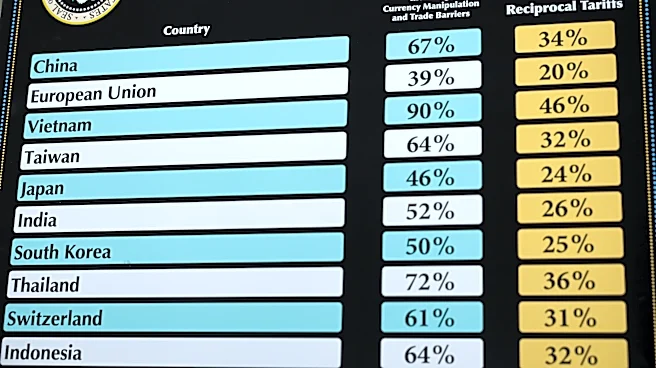
Union, Japan, Korea, and India, as actionable under Section 301 of the Trade Act of 1974. These practices, related to structural excess capacity and production in manufacturing sectors, are deemed to burden or restrict U.S. commerce. Consequently, additional tariffs have been proposed, with potential duties of up to 20% on certain Chinese goods and up to 10% on other specified goods. This development has led to a broader market reaction, with several stocks experiencing declines.
Why It's Important?
The proposed tariffs have significant implications for U.S. industries, particularly those reliant on global supply chains and foreign components. Higher import tariffs can increase costs for industrial manufacturers, potentially impacting their profitability and competitiveness. Furthermore, such trade barriers often provoke retaliatory measures from trading partners, which could further disrupt international trade and negatively affect corporate earnings expectations. For companies like Aurora Innovation, which operates in the automobile manufacturing sector, increased costs for components or disruptions in supply chains could hinder production and growth. The broader market decline, especially among industrial companies and those in the artificial intelligence and semiconductor sectors, indicates investor concern over the potential economic fallout from these trade policies.
What's Next?
The proposed tariffs are expected to lead to further market volatility as investors assess the potential impact on various sectors. Companies that depend on international supply chains or export goods to the affected economies may face increased scrutiny and pressure on their stock prices. The situation could also prompt affected economies to consider their own retaliatory measures, escalating trade tensions. Market analysts, such as Mark Haefele, chief investment officer at UBS Global Wealth Management, anticipate greater differentiation between established platforms and companies heavily reliant on debt or speculative growth. A continued pullback in artificial intelligence and semiconductor stocks could further weigh on industrial companies that supply manufacturing equipment or electronic components.
Beyond the Headlines
Beyond the immediate financial impact, these proposed tariffs highlight ongoing global trade tensions and the U.S. government's strategy to address perceived unfair manufacturing practices. The use of Section 301 of the Trade Act of 1974 underscores a continued focus on protecting U.S. commerce and industries from foreign competition deemed to be operating with structural advantages. This approach could lead to a re-evaluation of global supply chain strategies by U.S. companies, potentially encouraging more domestic production or diversification of sourcing. The long-term implications could include a shift in global manufacturing landscapes and a redefinition of international trade relationships, with potential effects on consumer prices and the availability of goods.