






What's Happening?
Larry Culp serves as the American business executive, chairman, and CEO of GE Aerospace. Born in March 1963 in Washington, D.C., Culp attended Washington College and earned an MBA from Harvard Business School. His career began at Danaher in 1990, where
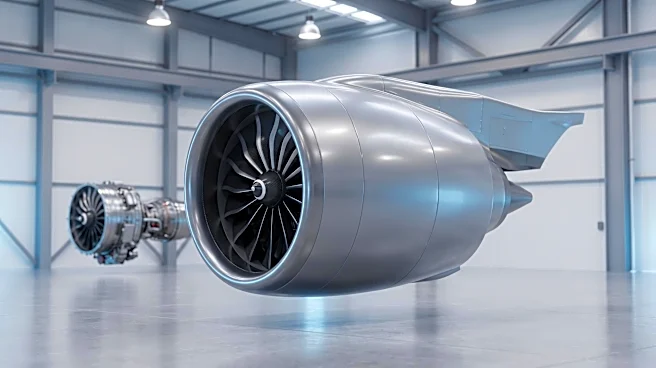
he eventually became CEO in 2001. He later joined GE's board and was appointed chairman and CEO of General Electric in 2018. Culp's leadership has been central to GE's restructuring and its subsequent separation into three independent public companies: GE HealthCare, GE Vernova, and GE Aerospace. GE Aerospace, which became an independent public company in April 2024, designs, develops, manufactures, and services aircraft engines and related systems for commercial aviation, military and defense, and other aerospace markets. The company's offerings include integrated engine systems, avionics, mechanical systems, digital solutions, and comprehensive lifecycle services such as maintenance, repair, overhaul, and technical support.
Why It's Important?
Larry Culp's tenure at GE, particularly his role in leading the company's significant restructuring and the spin-off of GE Aerospace, marks a pivotal period in American industrial history. His focus on operational improvement and corporate transformation has reshaped one of the nation's most iconic conglomerates. The successful separation of GE's businesses into distinct entities like GE Aerospace allows each to pursue specialized strategies, potentially enhancing their competitiveness and market value. For the U.S. aerospace industry, GE Aerospace's independence under Culp's leadership signifies a dedicated focus on innovation and service delivery in a critical sector. This strategic shift impacts thousands of employees, numerous suppliers, and global customers, including major airlines, aircraft manufacturers, and defense organizations, by fostering a more agile and specialized entity capable of responding to evolving market demands and technological advancements.
What's Next?
Under Larry Culp's continued leadership, GE Aerospace is expected to further solidify its position as a global leader in aircraft propulsion and related systems. The company will likely continue to focus on securing critical manufacturing capacities, as highlighted by past strategic acquisitions. Future developments may include continued investment in advanced aerospace technologies, such as sustainable aviation fuels and electric propulsion systems, to meet evolving environmental regulations and market needs. GE Aerospace will also likely pursue further operational efficiencies and strategic partnerships to maintain its competitive edge in both commercial and defense sectors. Investors and industry observers will be closely watching the company's financial performance and strategic initiatives, particularly its ability to navigate supply chain challenges and geopolitical shifts that impact the global aerospace market.
Beyond the Headlines
Larry Culp's leadership at GE and GE Aerospace extends beyond mere financial restructuring; it represents a broader trend in American corporate strategy towards specialization and agility. The dismantling of a diversified conglomerate like GE into focused entities reflects a belief that smaller, more specialized companies can better innovate and respond to market dynamics. This approach could serve as a blueprint for other large, complex organizations facing similar pressures. Furthermore, Culp's emphasis on 'mission-critical casting capacity' underscores the strategic importance of domestic manufacturing capabilities and supply chain resilience, particularly in defense and aerospace, which are vital for national security and economic stability. The long-term success of GE Aerospace under Culp will not only be measured by its financial returns but also by its ability to drive technological advancements and maintain a robust industrial base in the U.S.