



What's Happening?
Pull-up bars are emerging as essential home fitness equipment, offering versatile solutions for building upper body strength and overall fitness. Various models cater to different needs, spaces, and budgets, ranging from simple doorway bars to multi-function
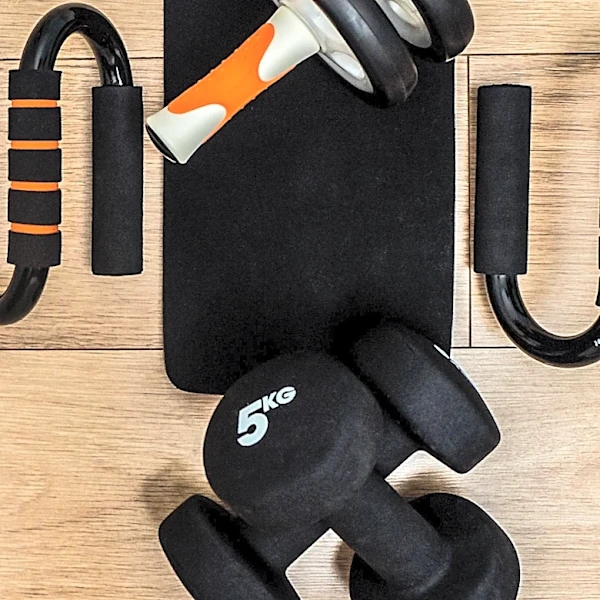
power towers (also known as Roman chairs). Doorway bars are ideal for apartments and small spaces due to their screw-free, pressure-mounted design, allowing for easy installation and storage. More advanced options, like power towers, provide superior stability and versatility, often including dip stations, push-up handles, and ab stations, effectively creating a comprehensive home gym. Key considerations for choosing a pull-up bar include available space, specific fitness goals (e.g., targeted back and bicep training vs. full upper-body workout), and safety features like weight capacity and stability.
Why It's Important?
The increasing popularity of pull-up bars for home use is significant for the U.S. fitness landscape. It underscores a growing consumer demand for accessible and effective strength training options that can be integrated into daily life without requiring a gym membership. This trend empowers individuals to build significant upper body strength and improve functional fitness from the convenience of their homes, contributing to better public health outcomes. For the fitness equipment industry, it highlights a market for durable, space-efficient, and multi-functional products. Businesses that offer a range of pull-up bar solutions, along with clear safety guidelines and usage instructions, are well-positioned to meet this demand. It also promotes a more self-directed approach to fitness, where individuals can customize their workout environment to suit their specific needs.
What's Next?
The market for home pull-up bars and related strength training equipment is expected to continue innovating, with a focus on enhanced safety features, improved ergonomics, and greater versatility. Manufacturers may introduce more modular designs that allow for easy expansion or customization. There will likely be an increased integration of smart technology, such as apps that track repetitions, provide form feedback, or offer guided workout programs specifically for pull-up bar exercises. Retailers will likely expand their offerings to include more comprehensive home gym packages centered around pull-up stations. Additionally, educational content on proper technique, progressive overload, and injury prevention for pull-up bar users will become more prevalent to support safe and effective training at home.
Beyond the Headlines
The embrace of pull-up bars as a core home fitness tool reflects a deeper cultural appreciation for foundational strength and bodyweight mastery. It challenges the reliance on complex machines, promoting a return to fundamental movements that build functional strength and body control. This shift can foster greater self-efficacy and a sense of accomplishment as individuals master challenging bodyweight exercises. Ethically, it makes effective strength training more equitable and accessible, as pull-up bars are generally more affordable and space-efficient than many other pieces of gym equipment. The long-term impact could be a population with improved upper body strength, better posture, and a more holistic understanding of physical capability, achieved through accessible and sustainable means.